
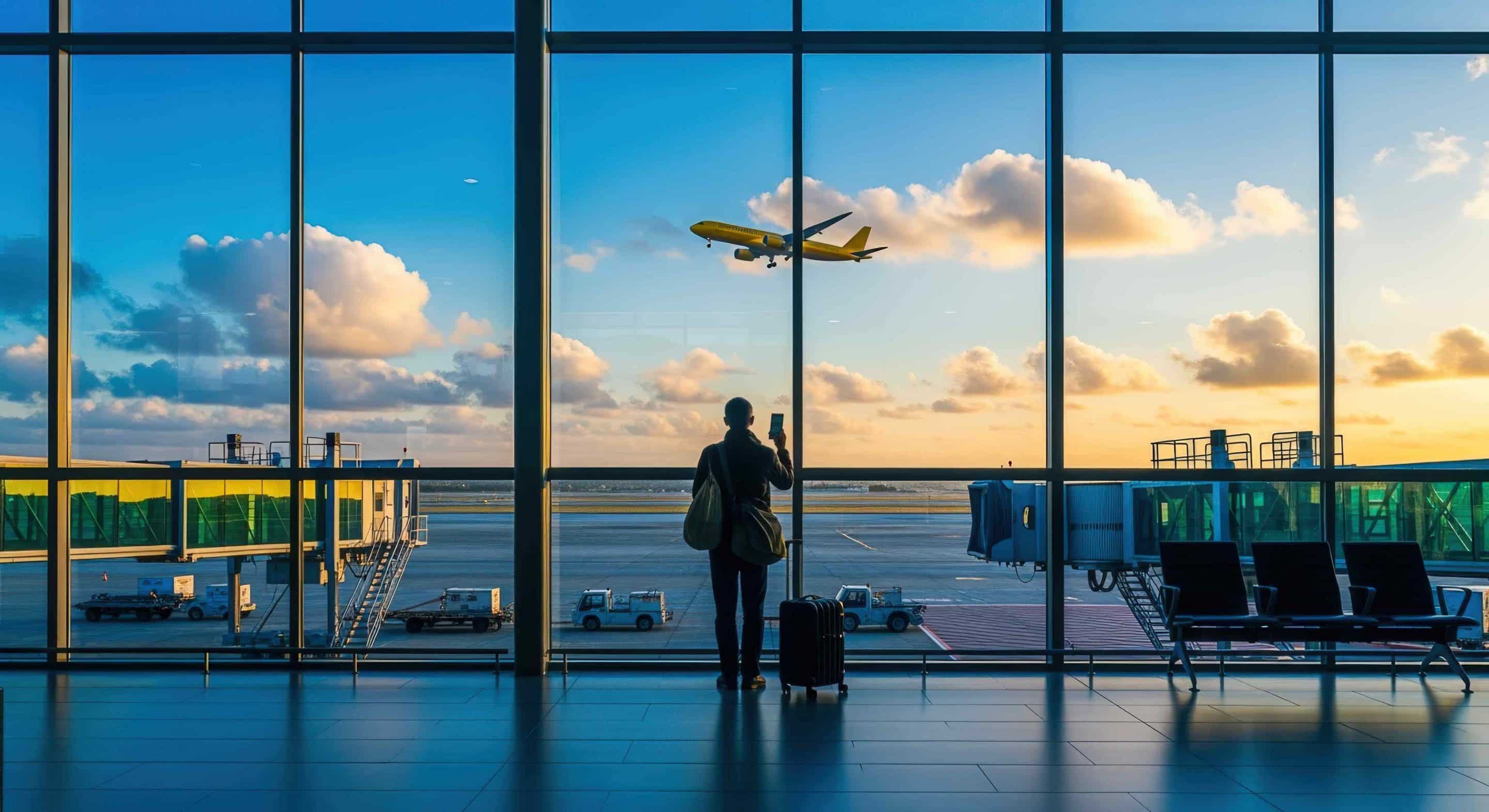
Missing a connection can make your whole trip feel like it is falling apart. You walk off the first plane, check the screen, and suddenly see that your next flight has already closed or taken off. Maybe storms slowed everything down, a mechanic needed extra time, or air traffic around a busy airport stacked flights in the sky. Many of these problems sit outside any airline’s control, but you are still the one standing in the terminal trying to decide what to do next.
The Department of Transportation has reported that in a recent year, about one in five flights on major domestic airlines arrived at least 15 minutes late. That is a lot of delays, and every delay can put a tight connection at risk. When this happens to you, it is easy to feel lost. You might want to run to the service desk, call the airline, open the app, or just sit down and try not to panic.
We created this guide to walk you through what to do when a delay makes you miss a connecting flight, how to work with airline staff and travel advisors, and how the automatic refund rule can help you get money back when you qualify.
Step By Step Plan When A Delay Makes You Miss Your Flight
Figure Out Why You Missed Your Flight
Your very first step is to figure out why you missed the connecting flight. That one detail controls most of the options you will have.
If the problem comes from your side, the airline usually has fewer ways to help. Maybe you arrived late to the airport, spent longer than you thought in security, stopped for a slow meal, or mixed up the boarding time. In those cases, most airlines treat the situation like a voluntary change. You may need to buy a new ticket, pay a change fee, or accept a very limited same day option if one is available. You can still ask for help, but you should be ready to hear no.
Things look very different when an airline issue causes the missed connection. Late inbound planes, maintenance checks, crew scheduling problems, gate holds, or other delays can push your first flight so far behind that you cannot reasonably make the next one. In those cases, the airline carries more responsibility and often has more flexibility.
What The Automatic Refund Rule Covers
As of October 2024, the Department of Transportation’s automatic refund rule tells airlines when they must send cash refunds without you having to chase them. Under this rule, you may get a refund when your flight is canceled or significantly changed and you decide you no longer want to travel on that schedule or accept any rebooking option. You can also qualify when your checked baggage is seriously delayed or when a paid extra service is not provided at all.
The airline must send refunds automatically, process them promptly, and use the same form of payment you used to buy the ticket. You should receive the full amount that you paid for the part of the trip that was affected. Always check the latest Department of Transportation guidance before you rely on exact timelines or details.
How To Talk To Agents For Faster Help
Travel advisor Beth Rowan, encourages you to move with a plan as soon as you realize you will miss or have already missed your connection. Walk straight to the airline’s customer service counter and call the airline at the same time on your phone. Many times, a phone agent answers before you reach the front of the line.

When you reach an agent, either at the counter or by phone, ask short, clear questions. Start with the basics. Ask when the next flight to your final destination leaves and whether there are open seats you can move into. Find out if the new route adds extra stops or uses different airports. If your cabin or seat type matters to you, confirm whether you will stay in the same class of service that you originally booked.
If the agent gives you more than one option, do not feel pressured to pick the first one right away. Ask them to explain the pros and cons of each schedule. This matters even more if you have another connection, a cruise, a tour, or an important event on the other end. A short extra connection today can be better than a long delay that creates bigger problems later.
Rowan also suggests asking about meal and hotel vouchers once you know you will be stuck for a while. If the delay keeps you at the airport over a normal mealtime or overnight, ask if the airline’s rules allow them to give you food coupons or a hotel stay. When the situation meets the airline’s internal guidelines, staff can issue these, and it never hurts to ask politely.
The hotel the airline offers will almost always be one of its partner properties close to the airport. You might not be able to choose, but even a simple hotel stay can save you a lot of money compared to booking a last minute room by yourself. Also remember that vouchers are often given per person. If you are traveling with family or friends, make sure everyone in your group gets what they are supposed to receive. Ask if ground transportation to and from the hotel is covered and whether any meals are included.
Through all of this, it helps to stay calm and respectful. People at the desk and on the phone must follow company policies, but they often have some freedom inside those rules. Clear questions and a patient attitude usually lead to better solutions than shouting at the counter. If you used a travel advisor to book your trip, call them as soon as the connection falls apart. A good advisor can talk to the airline for you while you find a quiet place to sit, charge your devices, and breathe. Their job is to help you solve these problems so you are not doing everything on your own in a crowded terminal.
How To Tell If You Qualify For A Refund Or Other Help
Once you know how you will get to your destination, the next question is whether you are owed money back. To answer that, you need to figure out who caused the missed connection.
If you missed the flight because of your own choices or timing, the airline usually has no legal duty to compensate you. Showing up late to the airport, cutting it too close at security, leaving the gate area for too long, or ignoring boarding calls usually counts as passenger responsibility. Some airlines might still help with a same day change or lower fee if they want to, but that help is voluntary.
If the earlier flight in your trip was delayed or canceled, the situation changes. Under the automatic refund rule, you may qualify for a refund in several specific cases. You can be entitled to a refund when a carrier cancels your flight and does not move you to another one. You may also qualify when your flight is canceled and you decide not to accept any rebooking option, or when your schedule is significantly changed and you do not want to travel on the new itinerary and do not accept any rebooking offers.
In simple terms, if the airline cancels a flight for any reason and does not rebook you or offers choices you do not want, you can ask for your money back instead of taking a travel credit or miles. You do not have to accept a voucher if you prefer a refund of the cash you paid.
The automatic refund rule also explains what counts as a “significant” schedule change. A flight is usually treated as significantly changed when:
- A domestic trip now leaves at least three hours earlier than planned or arrives at least three hours later than originally scheduled
- An international trip now departs six or more hours earlier than planned or arrives six or more hours later than scheduled
- The origin airport or destination airport is switched to a different one
- The number of connections in your itinerary increases compared to what you first booked
- You are moved into a lower class of service than the one you paid for
- You are asked to connect through different airports than the ones on your original ticket
- The replacement aircraft or connection point is much less accessible or workable for you because of a disability
If any of these apply and you decide not to accept the new schedule or any rebooking offer, you can request a refund instead of traveling on the changed itinerary.
Refund Rules For Bags, Extras, And Limits

Refund rights do not stop with flights. They can also apply to baggage delays. If you file a mishandled baggage report after you land and your checked bag still does not show up within 12 hours of a domestic flight reaching the gate, or within 15 to 30 hours of an international flight arriving, depending on how long the flight is, you may be able to get back the baggage fees you paid for that segment.
You can also receive a refund when you pay for extra services and those services never show up. This can include paid onboard Wi Fi that does not work during the flight, a reserved seat that you paid for but do not receive, or in flight entertainment access that stays unavailable the entire trip. If the airline fails to provide the add on you bought, you have a strong reason to ask for that fee back.
There is one important limit here. You usually cannot receive a refund under these rules if you accept a rebooked flight or choose to keep traveling on a significantly changed itinerary. Once you agree to the new schedule or accept a voucher or miles instead of money, you often give up the right to receive a cash refund for that part of the ticket.
On top of the automatic refund rule, the Department of Transportation notes that many domestic airlines have promised to give extra help when delays and cancellations are within the airline’s control. These extras can include hotel stays during overnight disruptions caused by the carrier, meal vouchers during long waits, or transportation between the airport and the hotel. Each airline sets its own details and can change them over time, so it is smart to look at the carrier’s current customer service promises before you travel.
How To Actually Get Your Refund Or Vouchers
Knowing that you might qualify for compensation is one thing. Making sure the money or vouchers reach you is another.
How Automatic Refunds Work In Practice
The automatic refund rule aims to take some of the work off your shoulders. When you qualify for a refund under this rule, the airline should process that refund automatically. In many common situations, you do not need to fill out long forms or argue back and forth. The money should come back using the same type of payment you used to buy the ticket.
If you paid electronically, such as with a bank or payment card, the carrier generally has seven business days to issue the refund once it has the needed information. If you paid with cash, a check, or a different method, the airline usually has up to 20 calendar days to complete the refund. These timelines can change if rules are updated, so it is a good idea to confirm the current guidance. (Check current terms before applying this.)
Airlines cannot replace a cash refund that you are owed with a travel credit or voucher unless you agree to that swap. You can always ask the agent what options are available, but the final choice should be yours. If you decide that a travel credit or voucher fits your future plans better, the rule requires that it stay valid for at least five years from the date it is issued. That long window gives you plenty of time to plan another trip.
Meal, hotel, and ground transportation vouchers work in a different way. Airlines usually do not send these items to you automatically, even if the delay is long and clearly within their control. To receive them, you generally need to talk with someone at the airline’s customer service counter or, in some cases, speak with an agent over the phone and ask where to pick them up at the airport. If you do not ask, you might miss benefits you could have received.
Staying Organized And Tracking Your Refund
While you work through refunds or vouchers after a missed connection, staying organized makes everything easier. Keep all of your boarding passes and confirmation emails together. Save any texts or emails the airline sends about delays or cancellations. Take a clear photo of the airport departure board if it shows the delay time and flight number. If you buy meals, a change of clothes, or toiletries during a long delay, save your receipts in case you need them later for a claim with the airline or for travel insurance.
When an airline tells you that a refund has been processed, set a reminder to check your bank or payment account within the next couple of weeks. If the money has not appeared after the time that the airline or the Department of Transportation has said it should, contact the airline again in writing. Keep copies of all messages you send and receive so you have a record of your follow ups.
Get Ready For Your Next Trip With More Support
A missed connection can make any trip feel stressful, but it can also be a turning point. Once you understand your rights, see how refunds really work, and know how to talk to agents with confidence, you are already in a stronger position for your next journey.
If you want more simple, step by step help like this, we would love to see you inside our free TheMilesAcademy community. We share practical tips on planning smarter routes, choosing better connection times, and using points and miles in a way that fits your real life, not some perfect travel magazine picture.
You can also use our free card finder tool to explore different types of travel and rewards cards in one place. It helps you match your habits and goals with suitable options so you can earn more points, protect your trips better, and feel more prepared the next time plans change unexpectedly.
Join us, ask questions, and learn from other travelers who also want to turn delays and disruptions into chances to travel smarter. With the right tools and a supportive community on your side, the next time you see a schedule change, you will know exactly how to respond.