
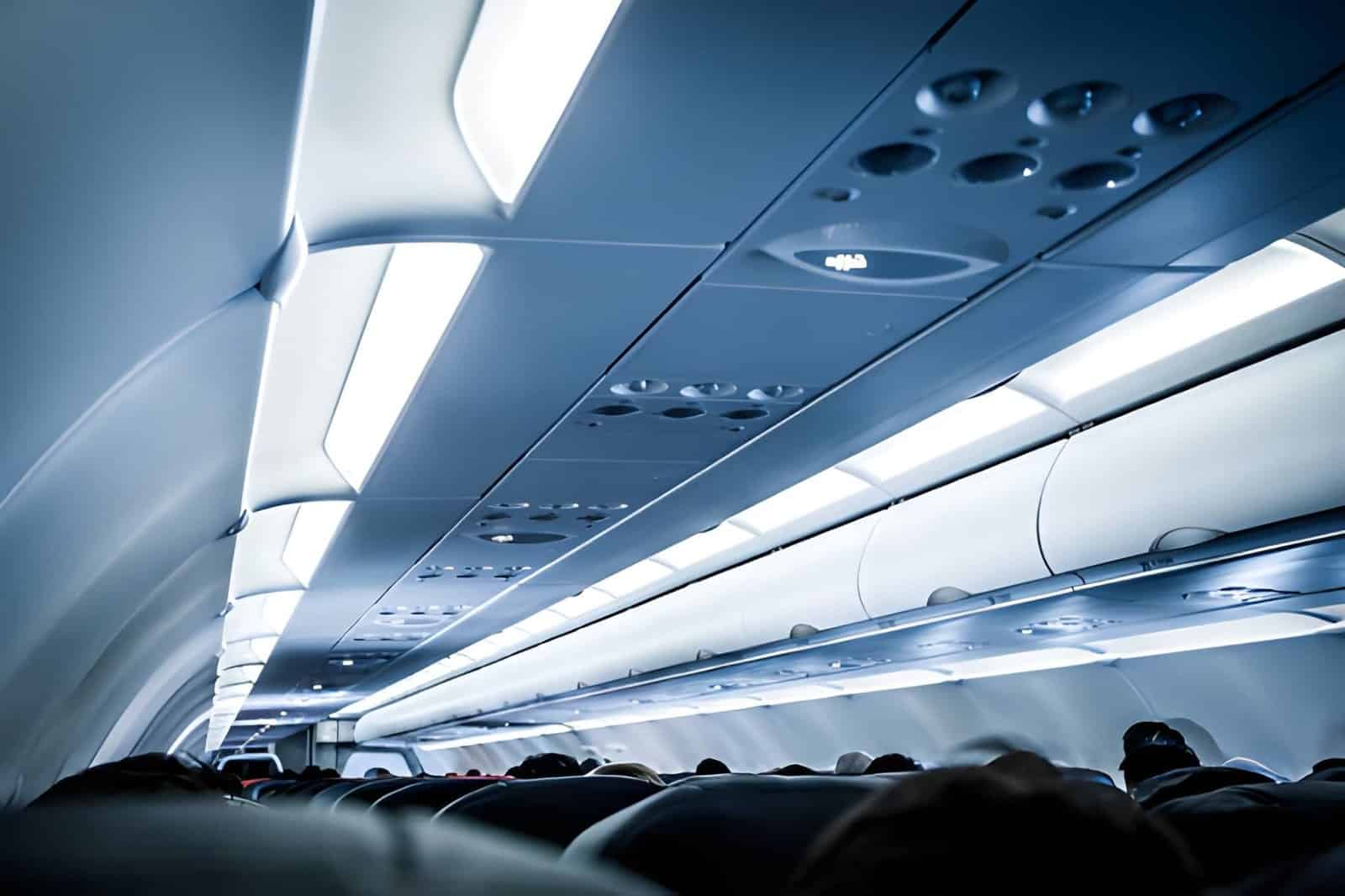
Most passengers notice airplane lighting only when the cabin suddenly becomes dark.
One moment, everything feels bright and active during boarding. Minutes later, soft blue lighting spreads across the ceiling while window shades close row by row. During overnight flights, the shift can feel dramatic because the atmosphere inside the aircraft changes almost instantly.
Many travelers assume cabin lighting exists purely for comfort.
Comfort matters, but airlines adjust lighting for several practical reasons involving safety, sleep cycles, passenger psychology, crew workflow, and long-haul fatigue management. Modern aircraft lighting systems are carefully planned because the environment inside an airplane strongly affects how passengers physically and mentally experience a flight.
Small lighting changes quietly shape the mood of the entire cabin.
Bright Cabins Help Boarding Move Faster
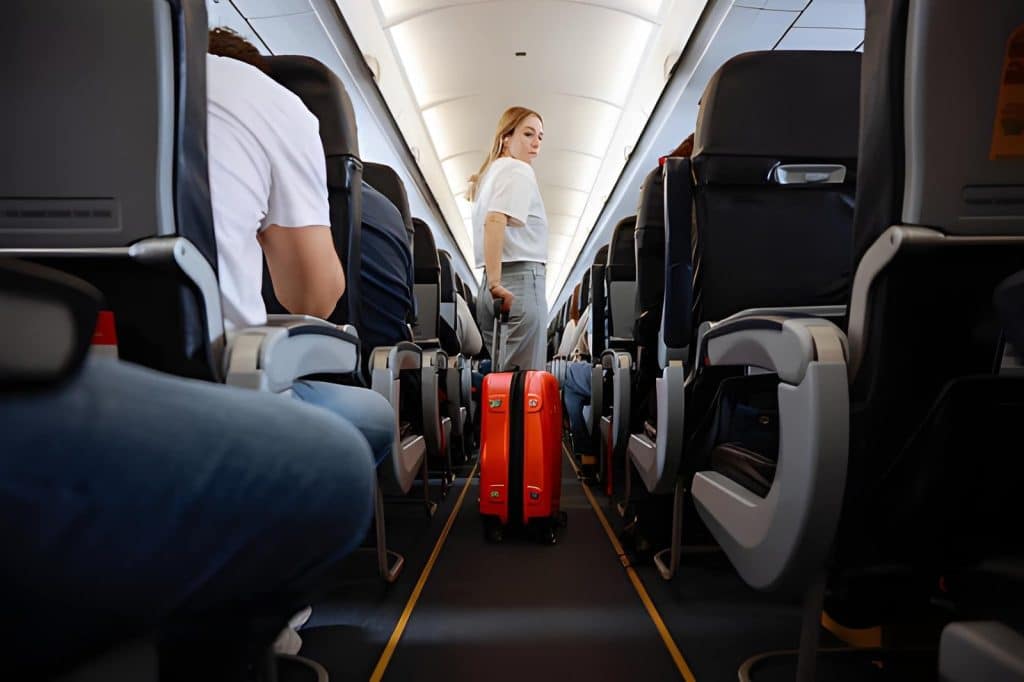
Airlines usually keep cabins fully illuminated during boarding for practical reasons.
Passengers need strong visibility while locating seats, lifting bags overhead, organizing personal items, helping children settle down, and navigating crowded aisles. Bright cabins reduce confusion during one of the busiest parts of the flight.
Cabin crews also depend on stronger lighting during pre-departure checks.
Flight attendants monitor overhead bins, blocked aisles, misplaced luggage, open compartments, and passenger movement more efficiently inside fully lit cabins. Problems become easier to identify quickly before departure.
The brighter atmosphere also creates psychological energy.
Boarding already feels chaotic for many travelers. Strong lighting helps the environment feel more organized, active, and controlled during that process.
Lights Dim During Takeoff for Safety
Many passengers notice cabins darkening before nighttime takeoffs and landings.
This happens partly for emergency preparation.
If an evacuation becomes necessary during darkness outside the aircraft, passengers’ eyes adjust more quickly to outside visibility when the cabin remains dim instead of being brightly lit. Sudden brightness contrast can temporarily reduce vision during emergencies.
Darker cabins help reduce that adjustment gap.
Window visibility improves, too. Cabin crews can monitor outside conditions more effectively when interior reflections decrease against darker cabin lighting. That visibility becomes especially important during takeoff and landing because those phases involve the closest operational attention.
The lighting change may feel subtle, but airlines treat it as an important safety procedure.
Different Colors Affect Passenger Mood
Modern aircraft increasingly use mood lighting systems instead of basic overhead bulbs.
Soft blue tones commonly appear during overnight cruising periods because cooler colors psychologically feel calmer and quieter inside crowded cabins. Warm orange or amber tones often appear during meal service because food looks more appealing under warmer lighting.
These color transitions are not random decoration.
Airlines discovered long ago that lighting strongly affects passenger behavior during flights. Bright white lighting keeps people alert and active. Softer colors encourage passengers to relax, lower conversation volume, and settle into quieter behavior naturally.
On long-haul flights especially, reducing mental overstimulation matters enormously.
Ten straight hours under harsh white lighting would make many cabins feel physically exhausting much faster.
Lighting Helps Passengers Sleep
Long international flights create serious sleep disruption.
Passengers cross multiple time zones while sitting inside pressurized cabins for ten or more hours. Airlines use lighting strategically to help reduce part of that fatigue.
Cabins often darken gradually after meal service to encourage passengers toward rest periods matching the destination time zone. Before arrival, lighting slowly brightens again to imitate morning conditions.
Some newer aircraft even simulate sunrise and sunset transitions gradually across the cabin ceiling.
The goal involves gently nudging passengers’ internal body clocks toward the arrival schedule before landing. That does not eliminate jet lag completely, but it helps reduce the abruptness of the transition slightly.
Passengers may barely notice the process consciously, but the body responds strongly to lighting patterns.
Darkness Makes Long Flights Feel Shorter
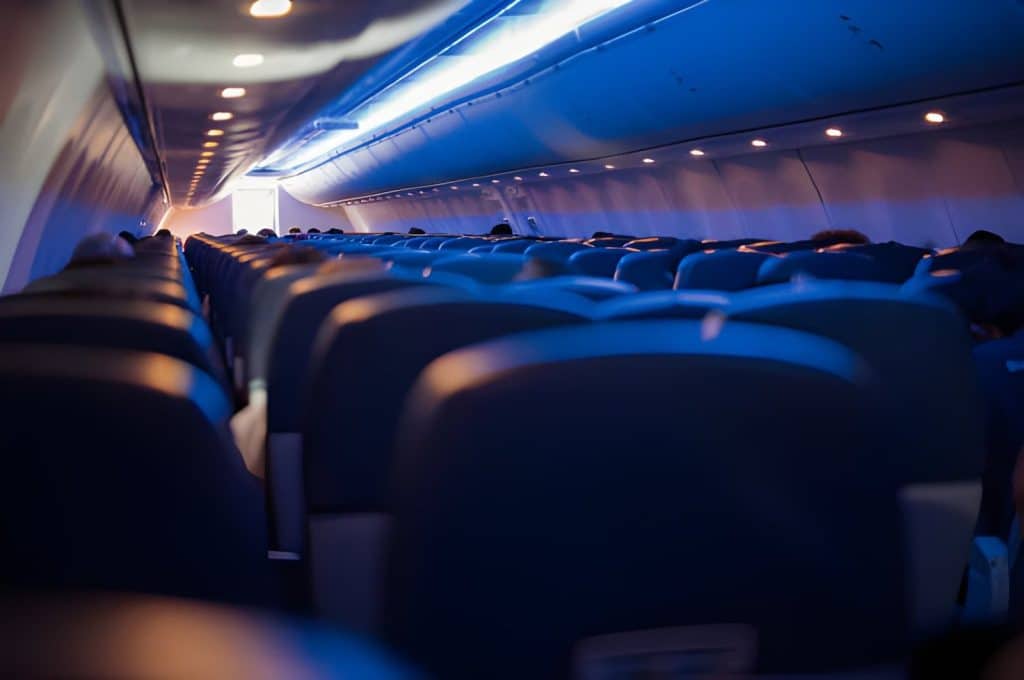
Dim cabins also change psychological time perception.
Bright lighting keeps passengers mentally alert. People move around more, notice time passing more actively, and remain more aware of physical discomfort inside the cabin.
Dark environments create the opposite effect.
Passengers become quieter, calmer, and more likely to sleep, watch movies, or mentally disconnect from the flight itself. The cabin begins feeling less like transportation and more like a temporary resting environment.
That shift matters enormously during overnight travel.
Long-haul flights would feel significantly longer if airlines kept cabins brightly illuminated throughout the journey. Darkness helps reduce sensory overload inside crowded spaces where passengers already experience physical fatigue from limited movement, dry air, and prolonged sitting.
Window Shades Work Together With Lighting
Cabin lighting and window shades usually operate as one system psychologically.
During takeoff and landing, crews often request open shades because outside visibility helps during emergencies. During overnight cruising periods, shades typically close alongside dimmed lighting to create more consistent darkness throughout the cabin.
Without coordinated shades, one bright window can flood several surrounding rows with sunlight while nearby passengers attempt sleeping.
On newer aircraft like the Boeing 787, electronically dimmable windows allow gradual brightness transitions instead of sudden sunlight exposure. That softer adjustment helps passengers avoid harsh visual shifts during long flights.
Consistency matters more than many travelers realize. Uneven lighting quickly becomes mentally tiring inside enclosed environments.
Older Aircraft Felt Much Harsher
Modern mood lighting dramatically improved long-haul cabin comfort compared to older airplane interiors.
Older aircraft relied heavily on simple fluorescent lighting systems with limited adjustment options. Cabins often felt either painfully bright or uncomfortably dark with little transition between the two extremes.
Newer LED systems allow gradual color and brightness shifts throughout the journey.
That flexibility helps reduce eye strain, soften overnight transitions, and create calmer cabin environments overall. Small environmental improvements become extremely important during ultra-long-haul travel where passengers remain inside the aircraft for half a day or longer.
Lighting alone cannot make flights luxurious, but it can make them noticeably less draining.
Flight Attendants Use Lighting Operationally
Cabin lighting also helps organize the rhythm of the flight itself. Different lighting settings quietly signal different stages:
- Boarding
- Meal service
- Overnight rest periods
- Midflight quiet hours
- Pre-landing preparation
- Final descent
Passengers subconsciously respond to these environmental cues.
Bright lighting encourages activity and movement. Dimmed cabins naturally reduce noise and foot traffic. Warm tones during meals make the cabin feel more relaxed even during crowded service periods.
The lighting quietly guides passenger behavior without requiring constant announcements.
Experienced travelers often begin recognizing these patterns instinctively after enough flights.
Good Flights Depend on Tiny Details
Most passengers focus mainly on seat size, food quality, or legroom while flying. Yet many smaller environmental details quietly shape comfort just as strongly:
- Cabin temperature
- Humidity
- Engine noise
- Lighting color
- Seat angle
- Sound levels
- Air pressure
Individually, each detail seems minor.
Together, they completely influence how physically exhausting or mentally calm a flight feels after several hours inside the cabin. Lighting matters because human attention constantly responds to the atmosphere, even when people barely notice it consciously.
Those lighting changes throughout the flight are not random decorations.
They are carefully timed tools designed to manage safety, comfort, fatigue, sleep, and passenger behavior during long hours inside an airplane.
Now, Why Do Airlines Dim Cabin Lights During Flights?
Airlines dim cabin lights for far more than comfort alone. Lighting changes help passengers adjust to sleep cycles, reduce mental fatigue, improve safety during takeoff and landing, calm crowded cabins, and make long-haul flights feel less physically draining.
Modern aircraft lighting is carefully designed to shape how passengers experience time, stress, and rest during the journey.
If you want to learn how experienced travelers reduce flight fatigue, sleep better on long-haul routes, choose smoother seats, and make overnight flights feel significantly easier, join the Skool community.
Members regularly share practical travel habits, aircraft comfort strategies, smarter booking decisions, and small adjustments that improve the entire flying experience.
Before your next trip, use the Smart Search Tool to compare travel setups, find perks that improve long-haul comfort, and build itineraries that help reduce stress before the cabin lights even dim.