
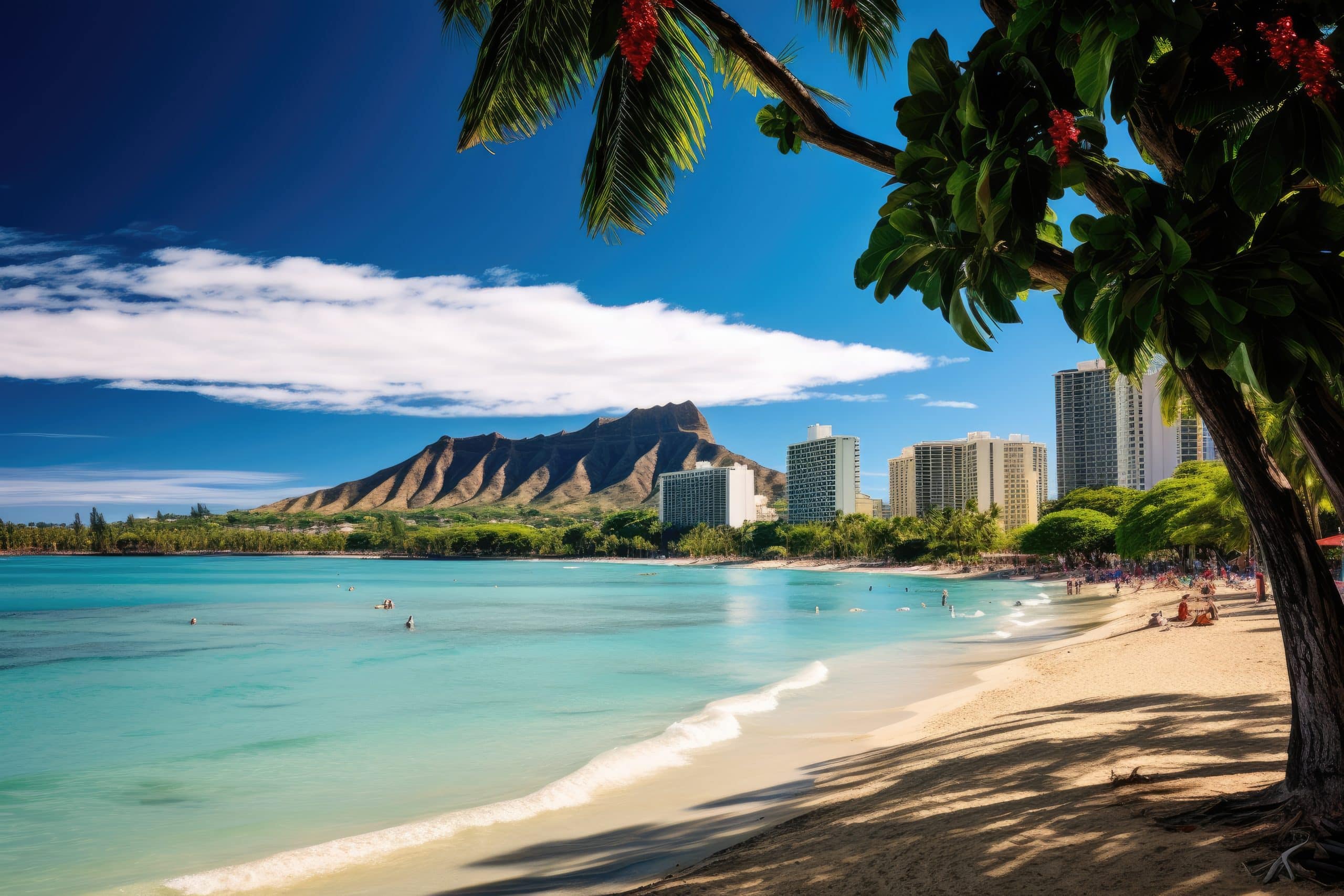
You are planning a Hawaii getaway, and we get the appeal. With a little planning, you can match your dates to the experience you want, from clear beach days to quieter trails and better prices.
Use this guide to choose travel dates that fit your goals, whether that is dry weather, peak wildlife sightings, or budget‑friendly deals.
Best Time to Visit Hawaii for Pleasant Weather
Most years, June, July, and September offer the most reliable mix of sunshine, light rain, and warm ocean temperatures. Those months often bring gentler trade winds and inviting water for swimming and snorkeling.
Hawaii does not follow a classic four‑season pattern and usually enjoys comfortable weather throughout the year. If those months do not work for you, you will likely still find good conditions. There is rarely a truly bad time to go.
On a mid‑April visit, we had warm days and comfortable evenings; one night even called for a light sweatshirt.
We also traveled in November two years in a row and found the ocean warm enough for swimming without the sun feeling overly intense.
Hawaii’s tropical climate typically keeps daytime highs around 83 to 88°F all year.
Check local forecasts because conditions vary across each island. Windward coasts see more passing showers, while leeward sides are generally drier. On Kauai, for example, the north side gets more rain than the south, and those quick showers often bring bright rainbows. Even when rain appears in the forecast, it usually arrives in short bursts.
On a recent Maui trip, the week looked rainy on paper, yet most days were sunny with only brief late‑afternoon showers.
Best Time to Visit Hawaii to Avoid Crowds
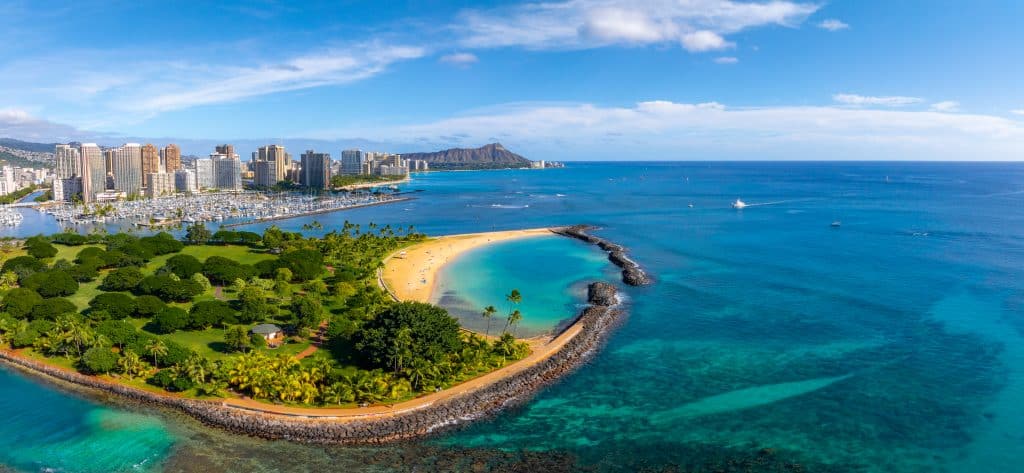
Visitor numbers usually rise from mid‑December through late March or mid‑April, depending on mainland spring breaks. Early April in places like Maui and Hawaii Island can still feel busy, but by mid‑April the crowds tend to thin.
Quieter windows typically run from mid‑April to mid‑June and then from September until the pre‑holiday rush. These shoulder periods often bring fewer people, better prices, and more space on the beach.
Even in busy city areas on Oahu, you will notice more breathing room after Labor Day and before Thanksgiving.
July and August are not always the single busiest period overall, but they still draw solid crowds, especially families on school break.
Cheapest Months to Visit Hawaii
Prices generally climb in peak seasons. If savings matter most, look at off‑peak and shoulder dates instead.
Common shoulder windows are late March into early May and September through mid‑November. Fares and hotel rates can drop sharply during these cushions around peak demand. We have seen one‑way sales from the West Coast in the low $60s in past promotions. Parts of spring break and early September still bring heavier demand and higher prices, so double‑check before booking.
Historical airfare data from major search platforms shows winter, especially January, often carries higher averages. Even then, sales sometimes bring sub‑$600 round‑trips from the U.S. East Coast to multiple Hawaii airports.
We regularly spot deals under $300 round‑trip from various mainland gateways, particularly in the western U.S. Keep an eye on dependable fare alerts and sale roundups. Maui has occasionally priced very competitively in recent years as the island continues to recover from the 2023 wildfires.
Analysts we consult suggest booking as early as possible for off‑season dates. Many travelers now reserve a week or less before arrival, and better bargains tend to surface farther out. Planning ahead helps.
If you are using travel rewards for flights or stays, you may find more flexibility, though hotel award pricing often tracks peak and off‑peak calendars. Flight award space also rises and falls with demand, even when hotels still release standard rooms for points bookings.
We have stayed at an upscale beach property on Hawaii Island where cash rates started in the mid‑$600s per night, while hotel‑loyalty redemptions began around 61,000 points. On Maui, a well-known resort recently lowered its redemption level in a major hotel rewards program, with entry‑level nights around 21,000 points.
Best Time to Travel to Hawaii for Surfing
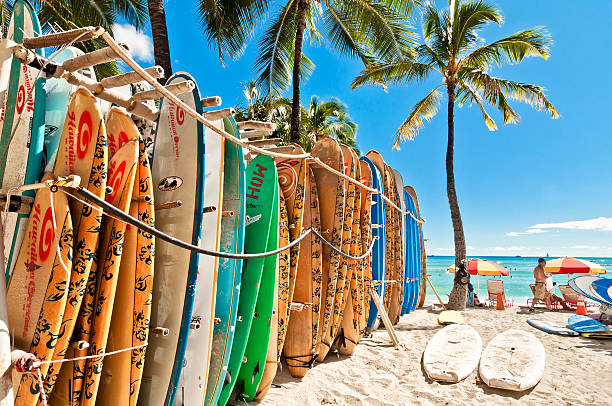
Four main visitor islands offer year‑round surf potential: Oahu, Maui, Kauai, and Hawaii Island. The right coastline depends on your skill level and the season.
In winter, north shores usually see the larger swells, while south shores are calmer. In summer, the pattern flips, with more consistent waves on south‑facing coasts.
For advanced riders, winter highlights include the famous North Shore of Oahu, with world‑class breaks along a stretch often nicknamed the Seven‑Mile Miracle. On Hawaii Island, strong options include Laʻaloa Bay and Hilo‑area spots like Honoliʻi Beach Park.
For beginners, winter’s south‑facing beaches are usually friendlier. On Maui, areas around Kā‘anapali, Lāhainā, and Kīhei often offer gentle rollers that are easier for learning.
Best Time for Wildlife Spotting in Hawaii
Whale Watching
Humpback whales migrate to Hawaii roughly from late December through early April, sometimes arriving as early as November. Maui and the Kohala Coast of Hawaii Island are two of the most reliable places to see them from shore or by boat.
We have had good experiences with reputable local tour companies that run whale‑watching and snorkeling excursions.
Sea Turtles
Hawaiian green sea turtles (honu) appear year‑round on Maui, Hawaii Island, Kauai, and Oahu. A well‑known gathering spot is Ho‘okipa Beach on Maui.
Visit in summer, during nesting season, to improve your odds. You may also see turtles on the grounds of some oceanfront resorts. On Hawaii Island, we have watched them in a property’s salt‑water lagoon. On Maui, they often linger near Kā‘anapali Beach, drawing many snorkelers.
Plenty of outfitters run turtle‑snorkeling trips, and we have had great luck on multiple outings.
Please keep a respectful distance of at least 10 feet, and never touch them. Human contact can introduce bacteria that harms turtles and can lead to starvation. Hawaiian green sea turtles are protected. Hawaii hosts five of the world’s seven sea turtle species, with greens the most common locally.
When to Visit Hawaii for Events
Spring
Consider the Honolulu Festival in March or the Lantern Floating ceremony held each Memorial Day at Ala Moana Beach Park in Honolulu.
Summer
On the third weekend of July, visitors can attend the Prince Lot Hula Festival, the state’s largest non‑competitive hula event.
Fall
The Hawaii Food & Wine Festival draws culinary fans with dinners, tastings, classes, and parties across October and November 2025 on Hawaii Island, Maui, and Oahu.
In September, the Aloha Festivals in Waikīkī feature arts and crafts, food booths, and performance stages, capped by a floral parade.
The Hawaii International Film Festival also takes place each October.
Winter
Winter is prime time for surf competitions, including the renowned Triple Crown of Surfing on Oahu’s North Shore, thanks to peak swells.
The Honolulu Marathon is another major winter highlight on Oahu every December.
Is There a Worst Time to Visit Hawaii?
Most months are wonderful. Expect warm weather and plenty of sun for much of the year, with many showers passing quickly.
Some locals point to December as a tougher month due to bigger crowds, higher prices, and a higher chance of showers. Even then, we would still trade a cold mainland winter for Hawaii at almost any time.
Join Our Free TheMilesAcademy Community!
If you want help turning these timing tips into an actual itinerary, join our free TheMilesAcademy community. You will get real‑time heads‑ups on fare sales and hotel deals, Q&A threads on island‑by‑island timing, sample weeklong schedules you can copy, and reminders about seasonal events that affect prices and availability. We also share packing lists for mixed‑weather days, island‑hopping checklists, and a crowd‑calendar snapshot for key holidays.
We keep everything practical and easy to follow. Ask us anything about choosing months, balancing surf and snorkeling conditions, or finding quieter beaches during school breaks. It is free to join and you can jump in any time before you book, during planning, or even while you are on the ground in Hawaii.
