

If you are flying to the United States for the first time or you have not dealt with entry rules in a while, knowing the steps can calm nerves and save minutes. We answer the questions we hear most from our community. Do you clear immigration when only connecting between other countries. What happens to checked bags. How much time should you leave for your next flight.
Airports in the United States follow a fairly consistent playbook. It is not perfect, but once you understand the flow, you can move with purpose and avoid last‑minute panic.
Everyone Clears Immigration At The First US Stop
It does not matter if you end your trip at that airport, connect to another city in the country, or continue to a different country. You clear immigration and customs at the first US airport where you land.
There is one common exception. Some foreign airports host official preclearance facilities run by United States authorities. At those locations you complete entry formalities before your flight to the United States. Examples include airports in Abu Dhabi, Dublin, Nassau, and Toronto among others. A small number of routes also test a one stop model that adjusts the order of identity checks and security. Availability is limited and can change. Check current details before you rely on a specific process.
Unlike many regions that offer sterile international transit, the United States generally does not provide a separate secure corridor for travelers connecting between two other countries. If you fly from São Paulo to New York and then to London, you still enter the country at New York, meet entry requirements, and only then continue to your next flight. Plan ahead for any authorizations you may need and allow extra time.
Lines at immigration can move quickly or slowly depending on arrivals and staffing levels. Buying a premium cabin ticket does not grant a special immigration line. You can, however, shorten the process with trusted traveler entry programs or an official mobile passport app where available. Program rules evolve. Check current terms before you count on them.
Pick Up Checked Bags Before You Continue
After you land, immigration comes first. Next, you collect your luggage at the carousel. Then you proceed through customs. Just past customs you almost always see a transfer counter or belt where you hand back bags for your onward flight.
Here is a simple example. You fly from Paris to Chicago and then to Los Angeles on one reservation. Your bag tag at departure usually lists Los Angeles as the final city. Even so, you still pick up your bag in Chicago, carry it through customs, and hand it to staff at the transit desk. The original tag remains valid for the final leg.
Always confirm that your bag is tagged to your true final destination before you leave the check‑in counter at origin. If your journey uses separate tickets or different carriers, the bag can be tagged only to the intermediate point. When that happens you must exit customs and visit a regular check‑in counter to recheck the bag for the next ticket. Give yourself extra time when your itinerary is not on a single ticket.

Agents at the transit desk can usually help with boarding passes, quick seat changes, and basic gate information. Use this moment to verify your next terminal so you head straight to the correct security checkpoint.
Clear Security Again After Immigration
If you continue to another flight, domestic or international, you pass through security again. Some airports maintain a separate line for connecting travelers that feeds into screening equipment near the arrivals corridor. Others send everyone to the main checkpoint with local departures. Follow signs and listen for staff guidance.
Standard security rules apply. Pack liquids correctly, keep restricted items out of your carry‑on, and be ready to remove electronics if required. If you are enrolled in an expedited screening program, use the appropriate lane when it is available at your checkpoint.
How Much Connection Time To Plan After An International Arrival
There is no single number that works for every airport and every traveler. Airlines publish minimum connection times, but those are often aggressive and assume everything runs on schedule. We suggest weighing these factors before booking a tight connection.
- Will your inbound flight likely arrive on time or is the route prone to delays.
- Will you use a citizen or resident line or join the standard visitor line.
- Do you have a trusted traveler entry program and an expedited screening program or will you use regular lanes.
- Are you landing during a heavy arrival bank when many long‑haul flights touch down.
- If arrivals are busy, will the security lines be busy as well when you re‑enter departures.
- How far is your next gate and will you change terminals or even buildings to catch your flight.
At a large Chicago hub a typical minimum for an international to domestic connection can sit around ninety minutes. Your comfort level should reflect your situation.
If we arrive as citizens or residents with only carry‑ons and we hold both a trusted entry option and an expedited screening program, we may feel fine with ninety minutes in normal conditions. There is still risk if the first flight runs late, but the odds improve.
If you arrive as a visitor without expedited programs, check bags, and land during the afternoon rush, ninety minutes can feel razor thin. Consider the common time drains.
- A routine arrival delay of twenty to forty minutes is not unusual on long flights.
- Immigration lines can stretch to forty‑five to sixty minutes during peak periods.
- Rechecking a bag takes extra minutes and some airlines cut off bag acceptance well before departure.
- Big hubs can require a long walk a train ride or a shuttle to change terminals.
- Security queues can take twenty to thirty minutes when many travelers re‑enter departures at once.
We have even seen aircraft held at the gate when the arrivals hall was saturated which meant no one could leave the plane for a while. That scenario is rare but possible.
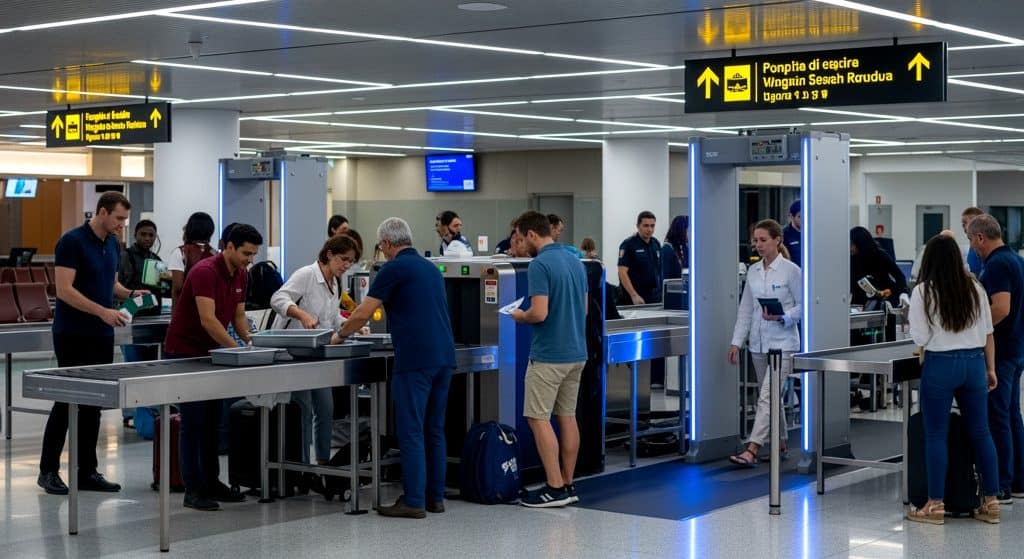
Even if you meet the published minimum there is no guarantee you will make your second flight. If your route operates frequently the airline will usually place you on the next flight with open seats. Full loads can limit options.
If you are new to US arrivals and you check bags we recommend an absolute minimum of two hours for a connection. Three hours often feels safer especially at large hubs or during busy afternoon waves. Extra time means less stress and more breathing room for delays outside your control.
Extra Planning Tips We Use
- Choose seats near the front of the cabin on the first flight so you reach immigration sooner.
- Complete required forms in advance and use a mobile passport app where it is supported.
- Keep travel documents handy and remove earphones before you reach the officer to speed up the interaction.
- If you must change terminals follow signs for transfers rather than exiting to the curb and reentering from the street.
- When you book separate tickets leave more buffer time and consider travel insurance with missed connection coverage. Check current policy terms before you rely on specific benefits.
Walk Off The Plane With A Plan
Most US airports follow the same rhythm. You clear immigration at your first stop collect your checked bags pass customs hand bags back at the transfer point and go through security again before your next flight. Give yourself more time than the bare minimum especially if you check bags or you do not have expedited programs. A generous buffer can turn a frantic sprint into a calm connection.
Join Our Free TheMilesAcademy Community Today!
Planning smoother connections starts long before you land. Join our free community where we share airport arrival tips smart connection strategies and real traveler playbooks. You can ask questions get feedback on your itinerary and learn from flyers who navigate these routes every week.
When you are ready to optimize your travel tools try our free Card finder. It helps you match your goals to the right categories and benefits. Tell the tool what you value such as baggage protections expedited screening credits airport lounge access or flexible points and it will surface options that fit your style. Use it before your next booking so you earn rewards wisely and cover the perks that make immigration and connections less stressful.
Tap to get started today.