
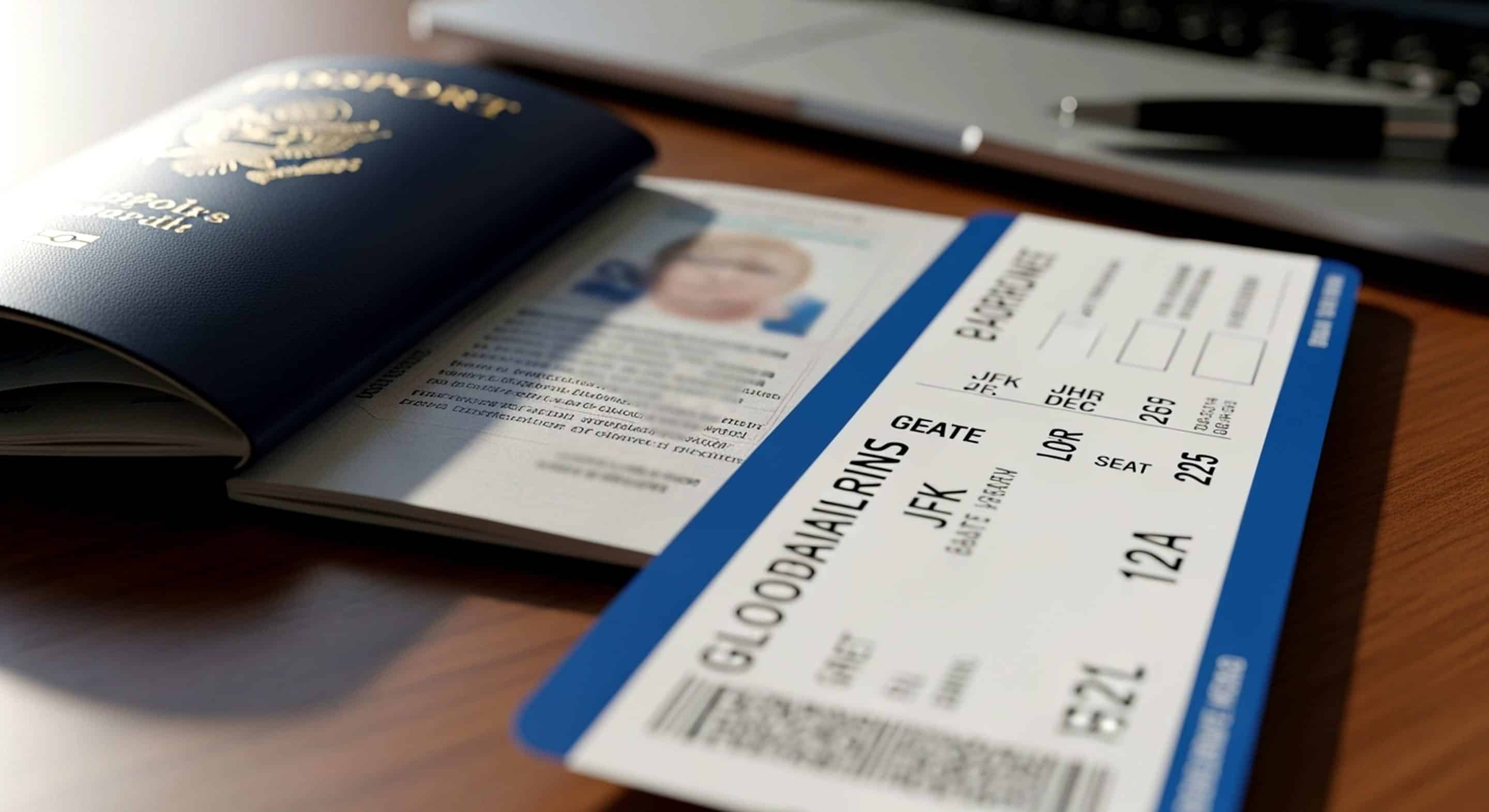
When you look at your boarding pass, you are usually thinking about one thing: “Will I make this flight or not?” You check the time, the gate, the seat, and maybe the boarding group. The flight number usually feels like background noise, just a mix of letters and digits in the corner.
It turns out that little code is doing a lot more work than you think. Airlines use flight numbers to keep a huge, messy system under control, and sometimes the people who assign those numbers sneak in small jokes or clever references just to entertain themselves. Once you know what to look for, it is hard to unsee it.
What A Flight Number Actually Does
Every flight number has two parts. First there is the short airline code, then there are one to four digits. From your point of view as a traveler, that number simply says, “Follow this plane to this gate.” It helps you match your boarding pass with the departure screen.
Behind the scenes, that same number appears everywhere in the travel system. You see it on airport departure and arrival boards, it is used in radio calls between pilots and air traffic control, it lives inside airline and airport computer systems, and it even shows up on baggage tags and tracking tools.
If two flights from the same airline tried to use the exact same number at the same time, things could get messy fast. You do not want someone in the tower asking, “Which flight 432 are we talking to right now?” That is why every active flight from a single airline needs a unique number.
How Airlines Pick Their Flight Numbers
Choosing flight numbers is not like picking lottery numbers. Airlines use a mix of software and human planning to keep things organized.
Inside the airline, computer tools silently track which numbers are already assigned, suggest numbers that are free for new routes or schedule changes, and help planners avoid conflicts when they add or move flights.
After that, real people take over. Network planners and operations teams decide which number gets attached to which route and time. They also coordinate with airports and air traffic control so everyone is working off the same data.
Special Routes Often Get Low Numbers
Some flights are more special to an airline than others. They might be the first long haul route the airline ever launched, a very busy business route, or a historic connection between two important cities.
These routes often get very low numbers such as 1 and 2. For example, a carrier based in Asia might use flight 1 from its main hub to Los Angeles and flight 2 back to the hub. Giving such a small number is a quiet way of saying, “This route really matters to us.”
Even And Odd Numbers Can Hint At Direction
Many airlines like to keep their schedules tidy by using even and odd numbers in a pattern. A common approach is to use even numbers for flights heading east or north and to assign odd numbers to flights heading west or south.
If you scroll through a day of flights between two cities, you might notice that one direction is mostly even and the other is mostly odd. No one in the airport is going to read this rule over the speakers, but it helps staff see the flow of traffic more clearly. It is like the airline’s version of keeping math homework lined up.
Similar Numbers For The Same Route
On busy shuttle routes between big cities, airlines sometimes give flights a matching set of numbers. You might see something like 2802, 2804, 2806, and 2808 running between two major airports in the same country.
It is not always perfect, because schedules change and flights get added or removed. Still, you can usually tell that someone tried to keep those trips grouped together. It makes it easier for staff to tell, “All these flights belong to the same city pair,” without staring at each line for too long.
Number Ranges For Different Regions
Some airlines assign number ranges to whole regions of the world. For example, they might use numbers in the 400s for trips to and from North America and set aside numbers in the 700s for trips to and from Asia.
So when someone in operations sees a flight in the 400s, they know it probably touches cities like New York, Chicago, or Los Angeles. When they see something in the 700s, they might expect places like Tokyo, Seoul, or Singapore.
Higher Numbers For Regional Partners
Many large airlines work with regional partners who fly shorter trips using smaller aircraft. These flights connect smaller cities into big hubs such as Atlanta, Chicago, or Dallas.
To keep things clear, airlines often put these regional services in higher number blocks, such as the 3000s or 4000s. When staff see a number in that range, they can guess that it is probably a partner-operated flight instead of a mainline one.
For passengers, the number itself does not tell you everything, but if you see something like 4123 instead of 123, it might be a hint that you are flying a shorter hop on a smaller jet.
Numbers That Get Retired Or Avoided
Flight numbers are not just about logic. Feelings and superstition sneak in too.
After a serious accident, it is common for an airline to retire that exact flight number forever. Using it again could upset passengers and staff who remember what happened. It is a small way to show respect and to avoid painful reminders.
Some numbers are also tied to bad luck in certain cultures. The number 666 is a classic example. Many airlines simply skip it. Every now and then you see a flight with that number, but most carriers quietly decide, “We do not need that drama in our schedule.”
Flight Numbers With Hidden Meanings
Now for the fun part. Once you understand the basic rules, you can start to see where airlines relax them just to slip in a joke or a clever reference.
If you have ever checked your boarding pass and thought, “There is no way this number is an accident,” you are probably right.
Here are some playful number choices large airlines have used:
- 777 to Las Vegas (LAS) on a big United States carrier. Triple sevens and a city packed with slot machines almost tell the joke by themselves.
- 1492 to and from Columbus, Ohio (CMH) on that same airline, using a date many people remember from history class.
- 1776 out of Philadelphia (PHL) on the same carrier, tying the flight number to a key year in United States history.
- Another domestic airline using 777 for a Las Vegas route, leaning into the same “lucky sevens” theme.
- A different major carrier using 777 to Las Vegas (LAS), 1776 from Philadelphia (PHL), and 888 to Beijing (PEK), with 888 fitting a culture where the number eight is seen as especially lucky.
Airlines Outside The United States Enjoy This Game Too
- Flight 7 to London Heathrow (LHR), a light wink at a famous fictional secret agent whose code number ends with 07.
- Flight 305 to Miami (MIA), matching the local 305 area code that many people use as a nickname for the city.
- Flight 971 into Dubai (DXB), matching the country code for the United Arab Emirates.
- Flight 1407 to Paris Charles de Gaulle (CDG), where 14/07 in day–month format points to Bastille Day, a major French national holiday.
- Flight 2222 to Toulouse (TLS), which turns “flight two two two two to Toulouse” into a free tongue twister over the loudspeaker.
- Flight 747 between Seattle (SEA) and Chicago (ORD) on a large United States airline, clearly nodding to a well known wide body aircraft that was built in that region.
- Flight 500 from Indianapolis (IND) to San Francisco (SFO) on the same carrier, a friendly shout-out to the famous car race held in Indianapolis.
These examples show that the people assigning numbers sometimes have as much fun as the passengers spotting them. Routes change, schedules move, and some of these combinations may not last forever, but new ones appear whenever planners update the timetable.
Join Our Community Of Curious Travelers
If details like flight numbers catch your eye, you are exactly the kind of traveler we love having in our corner. At TheMilesAcademy, we enjoy digging into the small things that make trips more interesting, from patterns on your boarding pass to smarter ways to plan your journeys.
You can join our free TheMilesAcademy community and learn with people who also enjoy this side of travel. We share tips, break down confusing topics, and help you turn everyday trips into opportunities to learn and save.
While you explore, you can also try our free card finder tool. It helps you quickly sort through different card options and match them with the way you already spend and travel, so you are not guessing in the dark when you make decisions.
If you like spotting hidden meanings in flight numbers, you will probably enjoy finding hidden value in your travel habits too. We would be happy to help you do both inside our community.