
Most travel rules seem arbitrary until you learn the reason behind them.
Take portable chargers, for example.
Millions of travelers carry one every day. They sit quietly inside backpacks, keep phones alive during delays, and save us from hunting for airport outlets. Yet they’re also one of the few common travel items that airlines don’t want anywhere near checked luggage.
If you’ve ever had a suitcase pulled aside during security screening because of a forgotten power bank, there’s a good reason for it.
The issue isn’t the charger itself. It’s the battery inside.
Tiny Devices Hold A Surprising Amount of Energy
Modern travel depends on rechargeable technology.
Phones, tablets, cameras, headphones, smartwatches, e-readers, and portable chargers all rely on lithium-ion batteries. These batteries are lightweight, efficient, and capable of storing large amounts of energy in a compact space.
That’s exactly what makes them useful.
It’s also what makes them a potential concern aboard an aircraft.
Under rare circumstances, damaged batteries can overheat rapidly. When this happens, temperatures can rise within seconds, producing smoke, fire, and intense heat.
Aviation experts refer to this chain reaction as thermal runaway. While uncommon, it’s one of the few battery-related risks airlines take extremely seriously.
Not All Batteries Are Treated The Same
One of the biggest points of confusion for travelers is understanding why some battery-powered items can go in checked luggage while others cannot.
A smartphone contains a lithium-ion battery.
So does a laptop.
Yet most airlines allow those items in checked baggage.
Portable chargers are different.
Unlike a phone or laptop, a power bank exists primarily to store electricity. It isn’t simply powering a device. It is the device.
Because of that distinction, aviation regulators classify portable chargers and spare lithium batteries differently from electronics with built-in batteries.
That’s why power banks belong in carry-on bags rather than checked luggage.
What Happens To Your Suitcase After Check-In

Many travelers assume checked luggage is handled gently.
The reality is much less glamorous.
Suitcases move through conveyor systems, baggage carts, loading equipment, and cargo compartments before reaching their final destination. During that journey, bags can shift, stack, compress, and occasionally absorb impacts from other luggage.
Most batteries handle normal travel without any issues.
However, airlines must account for worst-case scenarios rather than typical ones.
A damaged power bank buried deep inside a cargo hold is far more difficult to monitor than one stored inside a carry-on overhead bin.
That difference drives much of the policy surrounding battery transport.
Crew Members Can’t Help What They Can’t Reach
Location matters.
Inside the cabin, flight attendants can quickly identify unusual heat, smoke, or battery problems.
Airlines train crew members to respond to these situations using specialized procedures and equipment.
Inside the cargo hold, access becomes far more limited.
Aircraft cargo compartments include safety systems designed to manage various situations, but immediate human intervention isn’t possible once the aircraft is in flight.
That’s why regulators prefer potentially problematic batteries to remain where trained personnel can respond immediately if necessary.
Why Portable Chargers Cause So Much Concern
Portable chargers often spend their lives being tossed into backpacks, stuffed into pockets, dropped onto hard surfaces, and plugged into different devices.
Over time, that wear can affect internal battery components.
Most quality products are designed with multiple safety protections, but damage isn’t always visible from the outside.
A charger that appears perfectly normal may have experienced stress after years of use.
For this reason, aviation authorities focus heavily on spare batteries and portable charging devices when creating safety regulations.
The goal isn’t to alarm travelers.
It’s to reduce risk wherever possible.
Smart Travelers Follow a Few Simple Rules
Battery safety doesn’t require complicated preparation.
Before heading to the airport:
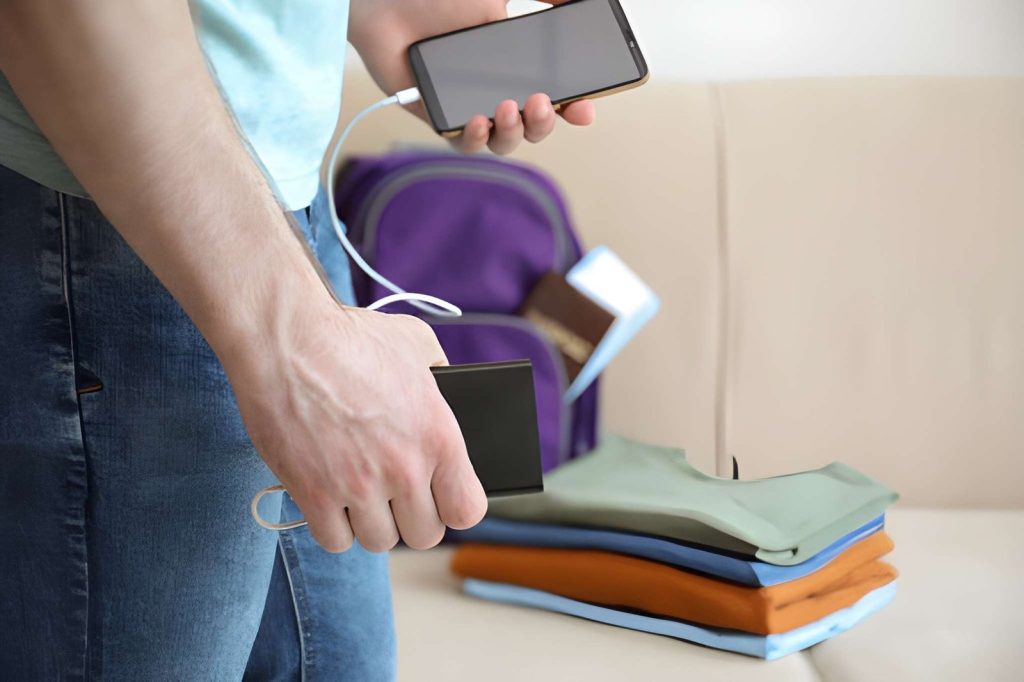
- Keep power banks in your carry-on bag.
- Store spare batteries where the terminals cannot contact metal objects.
- Replace chargers that show signs of swelling, cracks, or damage.
- Avoid purchasing extremely cheap batteries from questionable sources.
- Turn off electronics before packing them.
- Keep battery-powered devices accessible during travel.
These habits take almost no effort and help reduce potential problems.
The Number of Batteries In The Sky Keeps Growing
Twenty years ago, most travelers carried a camera and perhaps a mobile phone.
Today, a single passenger may board with a phone, tablet, smartwatch, wireless earbuds, laptop, portable charger, gaming device, and camera.
Multiply that across hundreds of passengers on every flight and the number becomes staggering.
The challenge facing airlines isn’t one battery.
It’s thousands of batteries traveling together every day.
As technology continues evolving, aviation safety policies evolve alongside it.
A Small Packing Choice Matters
Most travelers never experience a battery issue during a flight.
That’s exactly how everyone wants it to stay.
Keeping portable chargers and spare batteries in your carry-on isn’t about following a random rule. It’s about placing those devices where problems can be identified and managed quickly if they occur.
The next time you’re packing for a trip, take a quick look inside your suitcase before zipping it closed.
That portable charger may seem like just another travel accessory, but it’s one item that should always stay within reach.
Smart travel often comes down to understanding the small rules and habits that make trips safer and less stressful. Inside the Points & Miles Insider community, travelers share practical airport tips, packing advice, and real-world travel experiences.
Being prepared before departure can make every trip run more smoothly. The Smart Search tool helps you find travel cards that fit your goals, making it easier to earn rewards while enjoying valuable travel benefits along the way.