
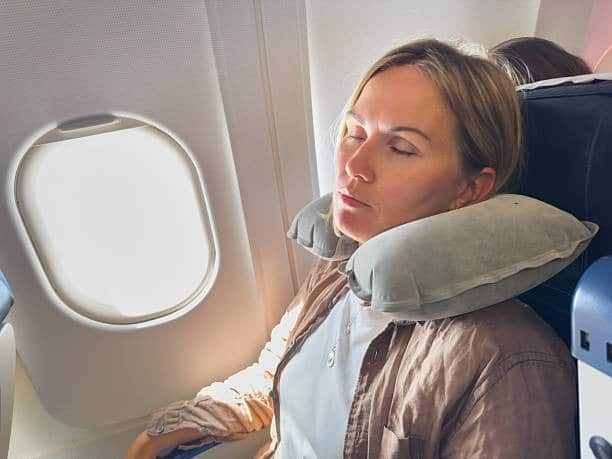
Long flights punish sleep in quiet ways. Dry air pulls moisture from your body. Cabin noise spikes without warning. Seats force your spine into shapes it never chooses on its own. If you treat in-flight sleep as luck, you arrive tired. If you treat it as a system, you arrive at a functional system. Here is how experienced travelers actually get rest in the air.
Seat choice matters more than class
A window seat helps because it gives your upper body something solid to lean into and keeps strangers from brushing past you. An aisle seat can work just as well if you use it correctly. Lift the inner armrest when allowed and anchor your torso there. What matters most is avoiding rows near bathrooms, galleys, and bassinets. Foot traffic ruins sleep faster than legroom fixes it.
Darkness is a physical signal, not a preference
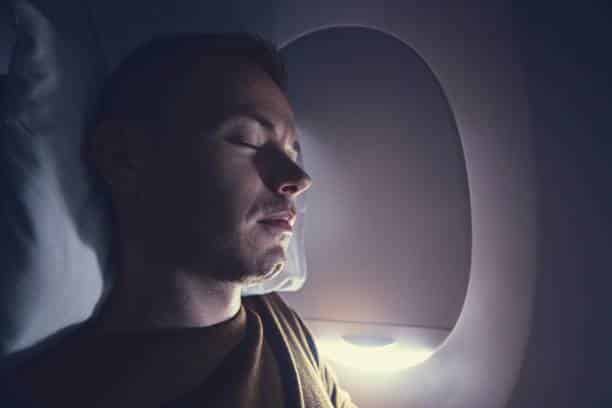
Your brain reacts to light long before you notice it. Overhead LEDs, seatback screens, and neighboring windows all interrupt sleep cycles. Close your shade early and keep it closed. Wear an eye mask even if the cabin looks dim. Darkness tells your nervous system it is safe to slow down.
Clothing should protect circulation
Anything tight around your feet, calves, waist, or shoulders will wake you later. Loosen shoe laces or switch to soft slip-ons once seated. Avoid stiff belts and layered waistbands. Blood flow matters more than warmth. If your legs swell on flights, gentle compression socks help, but only if the rest of your outfit stays forgiving.
Time your sleep to arrival, not departure
Sleeping immediately after takeoff is not always the best move. Align rest with your destination’s night when possible. Even a short block of sleep at the right time helps reset your body clock and reduces jet lag.
Sleeping on a plane is never perfect. But when posture, light, sound, circulation, and timing work together, rest becomes predictable. That difference shows up the moment you land.
Build a sound barrier you trust
Engines hum, carts rattle, and conversations spike without warning. Noise-canceling headphones help, but simple earplugs work too. Pair them with familiar audio like white noise or a podcast you already know. Predictable sound keeps your brain from staying alert.
Support your neck, not just your head
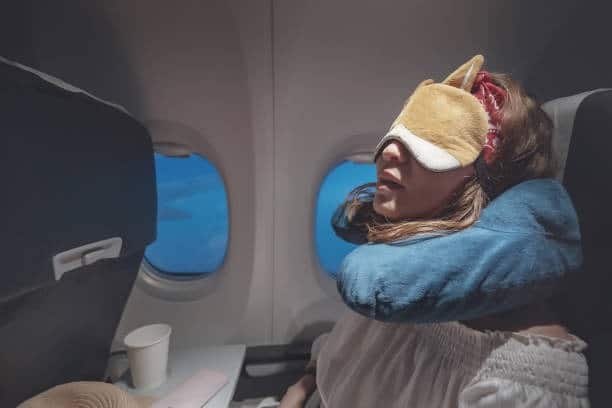
Most travel pillows push the head forward and strain the neck. Side support works better. A pillow that cradles the jawline or a rolled scarf tucked under one side keeps your head from dropping. The goal is neutral alignment, not cushioning.
Eat early and keep it light
Heavy meals raise body temperature and increase digestive effort. Both interfere with sleep. Eat modestly during service and avoid sugary snacks later. If hunger hits, protein works better than carbs. Stable blood sugar prevents early wake-ups.
Set up before you try to sleep
Use the bathroom, hydrate, and organize your seat area before settling in. Reaching for items mid-flight wakes you and everyone around you. Keep an eye mask, ear protection, lip balm, and a light layer within arm’s reach.
Keep both feet grounded
Crossed legs twist the lower spine and restrict circulation. It feels harmless until your body shifts to fix it, which breaks sleep. Keep both feet flat or use a footrest if your seat height leaves them dangling. Stability reduces the constant micro-movements that pull you out of rest.
Alcohol and caffeine both work against you
Alcohol makes falling asleep easier but fragments deep sleep and shortens recovery. Caffeine delays sleep even when fatigue says otherwise. Water and herbal tea are boring but effective. If nerves are the issue, slow breathing works better than drinks without sabotaging the second half of the flight.
Why Some Flights Leave You Exhausted, And Others Don’t
Most people don’t sleep badly on planes because they can’t sleep. They sleep badly because small details pile up. Seat position. Light. Timing. What they ate. When they tried to rest. Miss a few of those and the flight wins.
Inside The Miles Academy on Skool, travelers share what actually helped them rest on long routes.
- Which seat setups held through turbulence?
- What worked on overnight flights?
- What failed after hour six?
It’s practical and based on real flights, not theory.
For the rest of your long-haul setup, the card finder tool helps narrow options that fit how you travel, without piling on extra choices.