
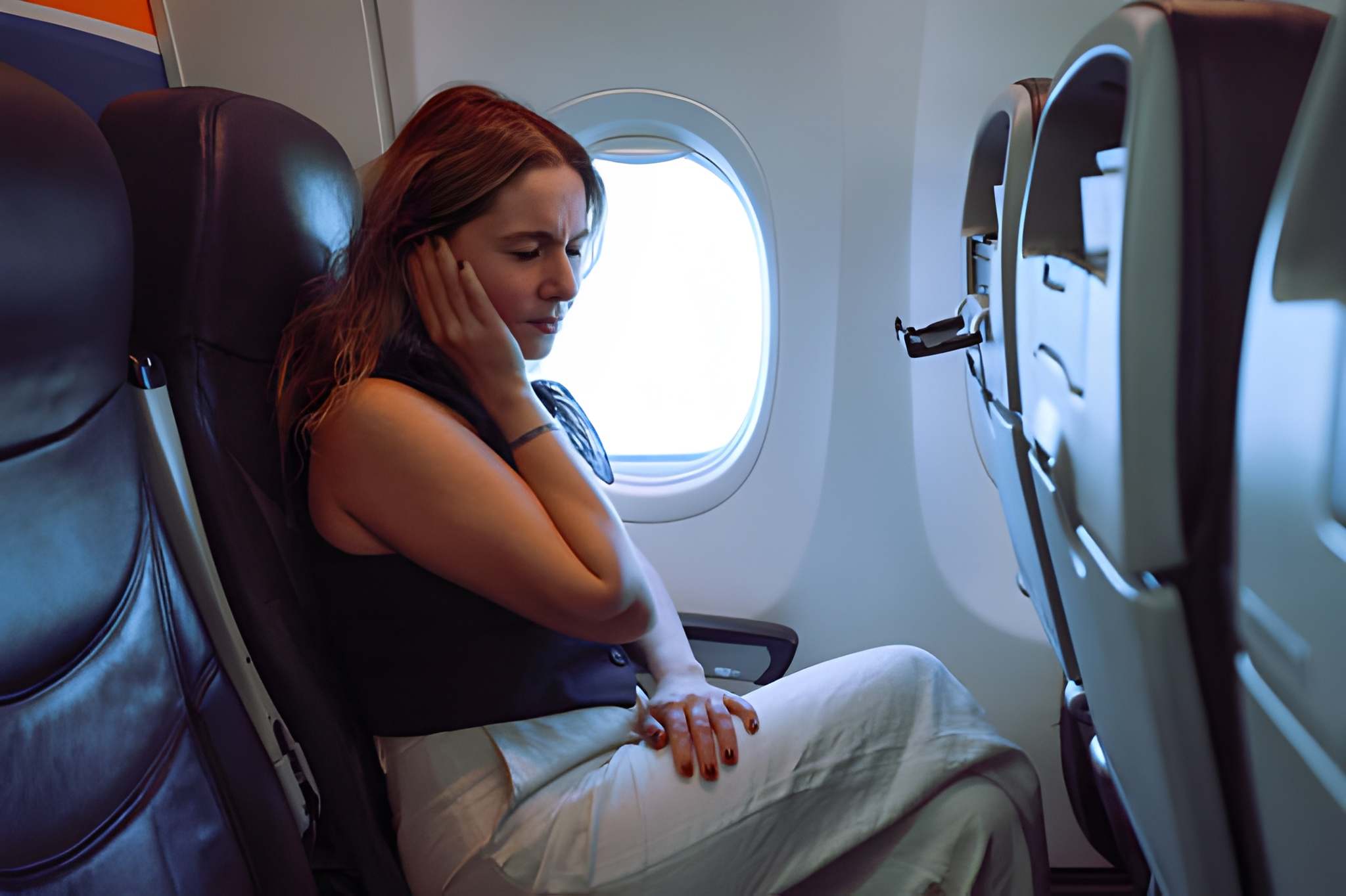
Flying feels stressful very quickly when the person in the next seat suddenly turns pale and quiet. One moment you scroll on your phone or try to nap. The next moment you notice the stranger by your armrest looks like they might throw up.
On a plane, you sit in a small, closed space with many other people. You cannot step outside for fresh air, and you usually cannot switch seats. That tight space can make someone else’s motion sickness feel like your emergency too. The good news is simple: airplane sickness happens a lot, usually passes, and almost never means anyone did something wrong.
As travelers, we can make the whole row calmer when we understand what happens in the body, stay steady, and make a few smart choices. In this guide, we at TheMilesAcademy show you why people feel sick on planes, how you can support a sick seatmate, what to do if you also get queasy in the air, and when you should call the crew for help.
How Flying Confuses Your Brain and Stomach
Motion sickness does not mean someone is weak or dramatic. It starts when your brain receives mixed messages from your eyes and your inner ear.
Your inner ear has tiny parts that sense movement and help you balance. On a plane, they feel the aircraft climb, turn, and drop. At the same time, your eyes may stare at a still screen or seatback. So your inner ear says “we are moving,” while your eyes say “we are not.” That disagreement can confuse your brain and trigger nausea, sweating, and dizziness.
Some people react to this more than others. Family history, inner ear or balance problems, pregnancy, migraines, anxiety, strong smells, or being very tired can all make motion sickness more likely. Even if you usually feel fine, you might struggle if you rush to the airport, skip food, or forget to drink water.
On the plane, signs usually build slowly. Your seatmate may turn pale, breathe faster, swallow often, or go very quiet and stare ahead. Warm air, tight seats, strong odors, and turbulence can turn mild queasiness into real sickness.
Remember that this is your seatmate’s body reacting to mixed signals, not bad choices. They did not pick this, and they are probably doing their best to stay in control.
How You Can Help Without Making Things Worse
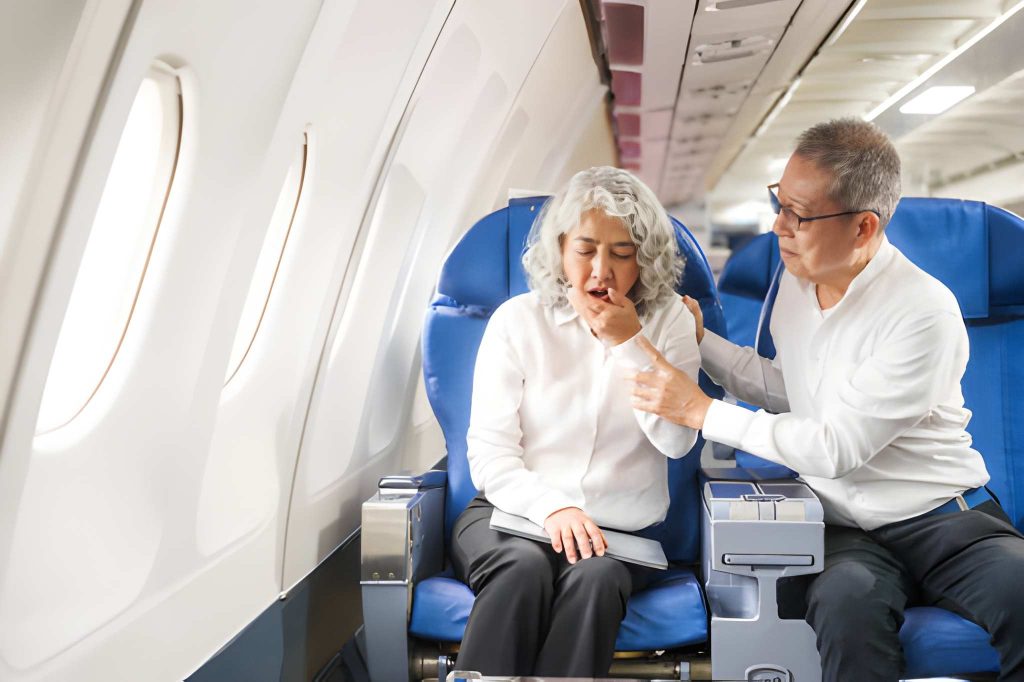
When your seatmate starts to look truly sick, you help most by staying calm and simple. Your goal is to lower stress, not to turn the moment into a big scene.
Start with one quiet question, such as, “Do you feel sick? Is there anything that usually helps you?” This gives them some control and shows respect.
Then you can offer small, practical help:
- Hand them water so they can take slow sips.
- Aim the overhead air vent toward their face and shoulders.
- Place an airsickness bag within easy reach.
- Ask if they prefer the window shade up or down.
- Suggest slow, deep breaths with long, steady exhales.
An expert on how flying affects the body often sums it up as: keep them calm, cool, and hydrated. You do not need to talk a lot. A quiet, steady presence usually works better than constant chatter.
Watch your own body language too. Move slowly, avoid big gestures, and keep your voice low and even. If talking seems to bother them, stay nearby but let the silence sit. When you keep your movements smooth and the space peaceful, you give their body the best chance to settle down.
If You Tend to Feel Sick on Planes Too
If you also feel queasy when you fly, you already know that prevention matters. Small choices before and during the flight can make a big difference in how your body reacts.
Experts in flying and medicine often suggest simple steps:
- Drink water during the day before your trip and keep sipping during the flight.
- Avoid heavy, greasy, or very spicy food right before boarding, and limit alcohol.
- Pick a seat over the wings or near the front of the cabin, where motion feels softer.
- Look at the horizon or a distant point instead of staring down at a phone or book.
- Try ginger tea or candies, acupressure wristbands, or slow breathing exercises.
- Move your head gently and avoid quick turns, especially during takeoff, turns, and landing.
- Talk with a health professional if you feel sick on many flights, so you can get a plan that fits you.
Each body responds in its own way. Cooler air and deep breathing help some travelers. Others feel better with a light snack and then no more food in the air. You might prefer closing your eyes and listening to music.
Treat each trip like a test. Notice what helps and what does not. When you repeat the habits that work, you step onto your next plane feeling more ready and less worried.
When It Is Time to Ask Flight Attendants for Help

Most cases of airsickness feel very uncomfortable but stay under control. Still, sometimes the situation reaches a level where you should tell the flight crew. If you notice repeated vomiting, signs that the person might faint, confusion, chest pain, or no improvement even after you adjust air, cooling, and fluids, you need to call a flight attendant.
Once you explain what is happening, the crew moves into action. They have extra airsickness bags, gloves, cleaning wipes, and often ice or cold packs. Medical experts note that placing a cold pack on the back of the neck or on the forehead can ease symptoms for some people because gentle cold helps the body calm down.
If there are open seats, the crew may move the sick passenger to a calmer part of the plane. This change helps a lot if turbulence started the problem, since some areas of the aircraft feel less bumpy than others.
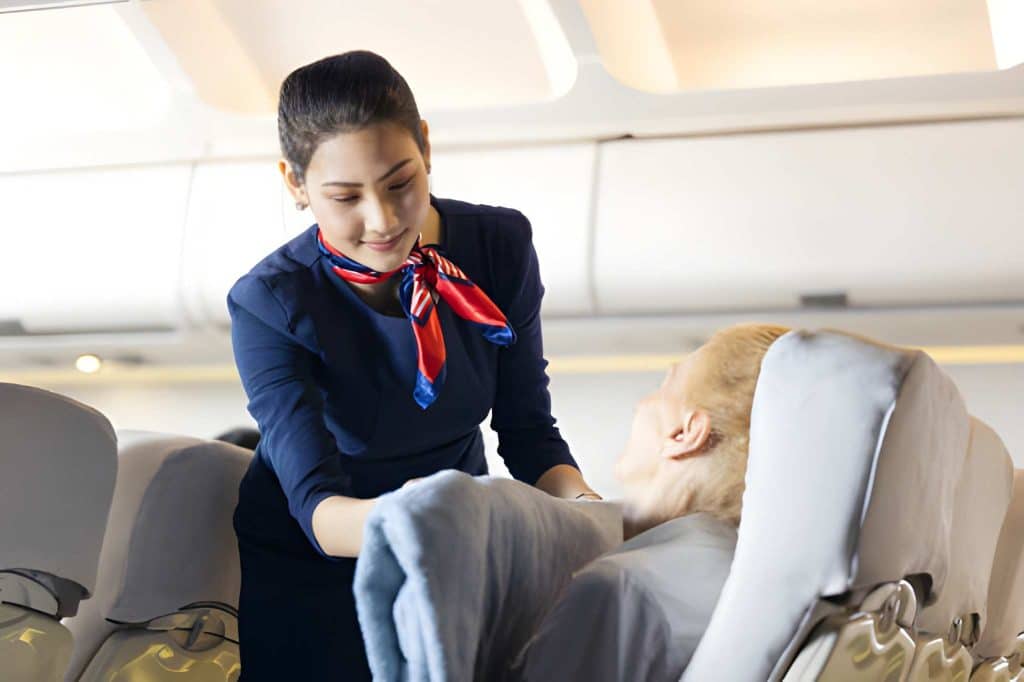
The crew’s experience also plays a big role. Flight attendants know the typical motion patterns for that route, understand which parts of the flight may feel rougher, and train to spot signs that something more serious than motion sickness might be happening. Their steady tone and clear instructions calm the sick person and reassure nearby passengers at the same time.
When you ask for help, keep your report short and clear. Tell them what you saw, how long it has been going on, and what you already tried. Then follow their lead. They deal with sick passengers much more often than most travelers realize, and they know how to respond.
How Small Kind Actions Change a Rough Flight
On every flight, a group of strangers share a tight space while a metal tube crosses the sky. When the person next to you becomes nauseated and afraid, the moment shifts from simple inconvenience to a chance to show kindness in a cramped place.
You do not need medical training to help. Most of the time, the actions that matter most look very small: staying still instead of fidgeting, keeping your voice low, offering a napkin dampened with ice water, turning the air vent to cool them off, or simply not reacting with disgust.
Airsickness happens. No one plans it, and no one feels proud when it hits. You can plan your response, though. When you understand how motion sickness works, prepare a few basic tools, and choose compassion over judgment, you make flying feel a little more human for everyone nearby.
Keep Building Your Confidence as a Traveler
If you want to feel even more relaxed on every trip, it helps to keep learning simple skills like the ones in this guide. When you understand how to handle a sick seatmate, pick better seats, and plan smarter, you turn stressful moments in the air into situations you already know how to handle.
We built our free TheMilesAcademy community to give you a place where you can ask questions, share travel stories, and learn practical tips from other travelers who care about comfort and calm, not just squeezing onto a plane. When you join us, you connect with people who also want to feel more prepared, whether they worry about motion sickness, airport stress, or planning their next big trip.
Inside the community, we also help you think through which cards might fit your travel style so you can earn rewards in smarter ways and use those points for trips that feel good from takeoff to landing. You can explore our free Card Finder Tool to compare different options in a simple, clear way and see which choices line up with your goals and habits.
We want you to step onto your next flight knowing you have tools for both your wallet and your well-being. Join our free TheMilesAcademy community, try our free Card Finder Tool, and keep growing the skills that make every journey feel smoother, kinder, and more in your control.