
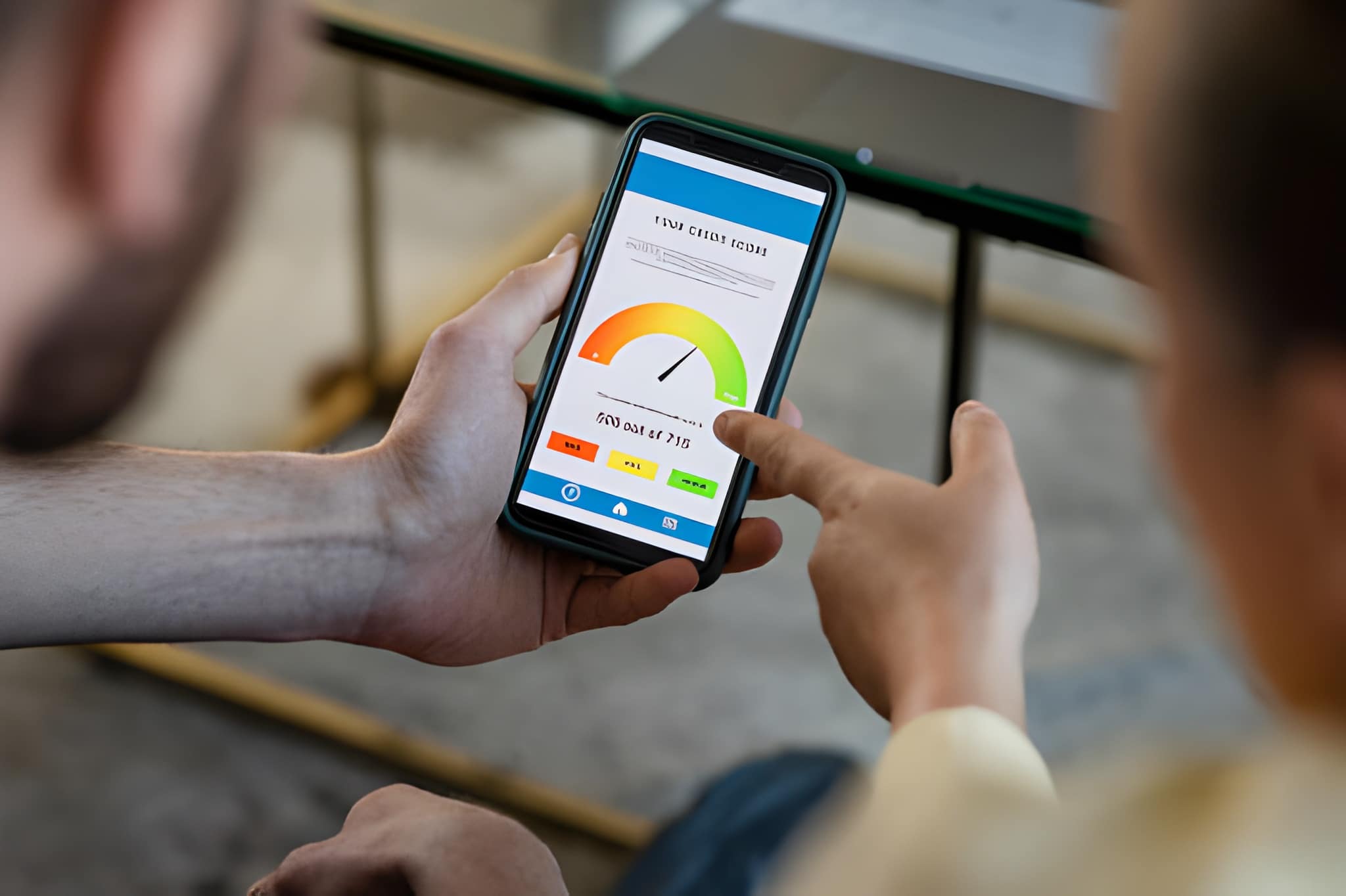
Seeing your score labeled “fair” is like getting a performance review that says “not a disaster” and calls it a day. It is not the worst category, but it usually means you will pay more to borrow and you will have fewer choices when you apply for financing.
Most lenders rely on one of two common scoring systems. In one widely used model, fair typically falls between 580 and 669. In another popular model, the closest equivalent is often called near prime, and it commonly runs from 601 to 660.
Put simply, a fair score signals that you have some positive history, but something in your file is holding you back from the best rates and terms.
Where The Fair Band Starts And Ends
A fair credit score sits below good and excellent, but above poor. It usually shows up when your credit history has at least one pressure point, such as a past late payment, high balances, a thin profile, or an issue on your credit report.
Here are a few common signals that often go with a fair score:
- Your payment history includes at least one late or missed bill.
- Your balances run high compared with your limits.
- Your credit file is new or has only a few active accounts.
- Your report includes a negative item or an error that needs attention.
When your score is in this band, you may still qualify for some loans and some card accounts. You just may not get the most competitive pricing or the broadest menu of options.
How Fair Compares With Typical U.S. Scores
Average scores shift over time, but they provide helpful context. In data published in April 2025, the U.S. average score under a commonly used scoring model was 715, which sits in the good range. Under that model, fair scores commonly run from 580 to 669, which places fair noticeably below the average.
Some lenders use another scoring model with different labels and cutoffs. In data from March 2025, the U.S. average under that approach was 702, while its fair-equivalent band, often labeled near prime, commonly falls from 601 to 660.
Because of the way these averages land, calling fair “average” can be misleading. Even though fair is not poor, it is typically below the national average in both scoring systems.
A Quick Look At Match Tool Results
In 2023, out of roughly 225,000 people who used a large personal finance site’s card-matching tool, a bit more than 21% fell into the fair score range.
Score Bands In Two Popular Scoring Models

Your score is built from the information in your credit history. That includes how consistently you pay, how much you owe compared with your limits, and how long you have been using credit.
Instead of a long list, here is the same range information in a clear format.
| Score Category | Widely Used Five-Tier Model | Widely Used Four-Tier Model |
|---|---|---|
| Top Tier | Exceptional: 800–850 | Super Prime: 781–850 |
| Strong | Very Good: 740–799 | Prime: 661–799 |
| Solid | Good: 670–739 | Near Prime: 601–660 |
| Middle-Lower | Fair: 580–669 | Sub Prime: 300–600 |
| Lowest | Poor: 300–579 |
The labels are not identical, but the direction is consistent. As your score improves, approval odds usually rise and the cost of borrowing usually drops.
Common Reasons Scores Land In The Fair Range
Fair credit does not come from a single cause. It usually comes from a mix of factors that scoring models treat as risk signals. If your score sits in the fair band, one or more of these issues is often involved:
- A late or missed payment
- High credit utilization
- A shorter credit history
- Limited active accounts
- Too many hard inquiries
- An account in collections
- Errors on your credit reports
We do not like guessing games, so we always recommend reviewing your credit reports first. Once you can see the actual items affecting your file, you can choose the highest-impact fixes instead of trying random tricks.
How These Issues Show Up In Everyday Life

High utilization can pull your score down even if you pay on time, because your balance-to-limit ratio often updates each month. Late payments can hurt more once they pass typical reporting thresholds, which is why catching up quickly matters.
A burst of hard inquiries can create a short-term dip and can also shorten your average account age if you open new accounts. Report errors can be especially frustrating because they can penalize you for problems you did not create, which is why checking for mistakes is worth the effort.
Why Crossing Into Good Credit Changes The Math
Moving from fair credit into good credit usually improves your approval odds for loans and card accounts. It also often lowers interest rates, which reduces your monthly payment and lowers the total interest you pay over time.
Auto financing is an easy place to see the difference. The average auto loan rate for a borrower in the fair range is 9.83%, while good-credit borrowers average 6.70%. On a $30,000 loan over 36 months, the same purchase can cost significantly more with a fair score compared with a good score.
| Loan Example | Good Credit | Fair Credit |
| APR | 6.70% | 9.83% |
| Monthly Payment | $590 | $635 |
| Total Interest Paid | $5,388 | $8,094 |
A better score can lower your cost for the same product, which frees up cash for savings, travel, and other goals.
Card accounts tend to follow the same pattern. Stronger credit generally unlocks a wider selection of options, more favorable pricing, and better overall value.
If you want to compare scenarios before you sign anything, a reputable loan calculator can help you see how rate and term changes affect your payment.
Approval Odds By Score Band
In 2023, users on a major personal finance site who applied for a popular cash-back card account saw different approval rates depending on score band. Fair-credit applicants saw approval a little over 16%, while good-credit applicants were close to 29%. Issuers vary and approvals are never guaranteed, but the overall trend is consistent.
Steps We Use To Help You Climb Out Of Fair
Improving a fair score is usually less about one big move and more about stacking a few reliable habits. We focus on the parts of your score you can control, then we keep the plan simple enough to follow.

First, treat on-time payments as your foundation. Payment history is a major factor in many scoring systems, often cited around 35% in a commonly used model. Autopay for at least the minimum due can prevent accidental late payments, and reminders a few days before the due date help you stay ahead of timing issues.
Next, manage utilization with intention. Utilization is the amount you owe compared with your total available credit. Lower utilization often helps. Many people aim to stay under 30%, and some see stronger results under 10%, but the best target is the one you can maintain without stressing your budget.
Then, consider increasing available credit carefully. A higher total limit can reduce utilization, but only if you do not turn that extra room into new debt. Some people request a credit limit increase. Others add a new card account that fits their spending and repayment habits.
Finally, check your credit reports for mistakes and dispute anything inaccurate. A 2024 report from consumer advocacy groups found that 44% of people who checked their credit reports found at least one error. Common problems include accounts you do not recognize, incorrect late payments, wrong balances, duplicate entries, or outdated negative items that should have fallen off. Fixing errors can sometimes improve your score faster than waiting for time to do the work.
Build Momentum With Our Free Community
Improving your score is easier when you are not doing it alone. Inside our free TheMilesAcademy community, we share simple routines that help you stay on track, like how to plan payments, lower utilization without feeling deprived, and spot report issues before they snowball.
If you want help choosing card options that fit your current score range and your goals, use our free Card Finder Tool. It helps you match your spending style and timeline with the type of card account that makes sense right now, so you can keep building credit while setting yourself up for better financial wins later.