
Japan sits high on a lot of travel wish lists, and it is easy to see why. The country blends calm spaces with nonstop energy, and the hospitality can feel unusually thoughtful. You can often get a similar vibe on a Japan-based full-service airline in business class, where the experience usually starts well before takeoff.
The problem is the price tag. Long-haul business class, especially on flights crossing the Pacific, can cost a lot in cash. Using points or miles is often the most affordable way to get the comfort, sleep, and airport perks without paying full fare.
In this guide, we’ll walk you through what to expect onboard, how the experience changes depending on the aircraft and seat style, and the most common ways to book these flights with loyalty currency. We’ll also include award examples from a specific route so you can see how different programs can price the exact same seat very differently.
Why Business Class on This Carrier Can Be Worth It
When you redeem for business class on a Japan-based airline, you are usually paying for a better night of rest, a calmer airport routine, improved dining, and small comfort upgrades that make a long flight easier.
On the right aircraft, a lie-flat bed can turn an exhausting overnight into a relaxing sleep. At the airport, priority services and lounge access can reduce the worst parts of travel, especially during busy hours. Onboard, meals tend to feel like a proper course-by-course service instead of a rushed tray situation. You may also get extras like an amenity kit, upgraded bedding, and on select routes optional loungewear, depending on availability.
The key detail is that not every flight has the same seat. You do not want to redeem a premium amount and end up in an older recliner if you expected a private suite. Let’s make the seat differences clear.
The Cabin Experience Changes by Aircraft
This airline operates a mix of long-haul widebody aircraft and short-haul narrowbody aircraft. Business class can range from a private suite with a door to a comfortable recliner meant for short flights.
The Flagship Suite-Style Seat
On the newest long-haul aircraft in the fleet, the airline offers its best business-class setup. This is the version many travelers aim for when they want maximum privacy.
You can generally expect:
- A suite-style layout with a sliding door that helps you feel more enclosed
- A lie-flat bed that supports sleep on long flights
- A very large high-resolution screen for entertainment
- Built-in audio near the seat area that keeps your space simpler and less cluttered
- Extra storage, such as a wardrobe area and a dedicated spot for a larger carry-on
If your goal is maximum privacy, this is the aircraft type you want to target. It is also the version most likely to feel like your own little room rather than a standard premium seat.
The Standard Long-Haul Lie-Flat Seat
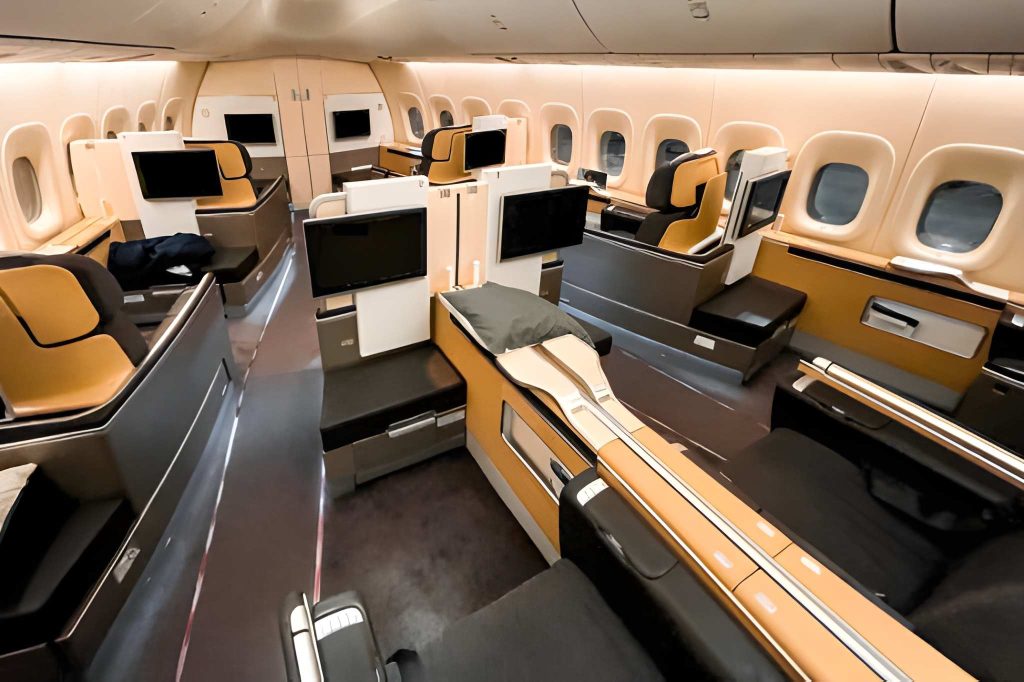
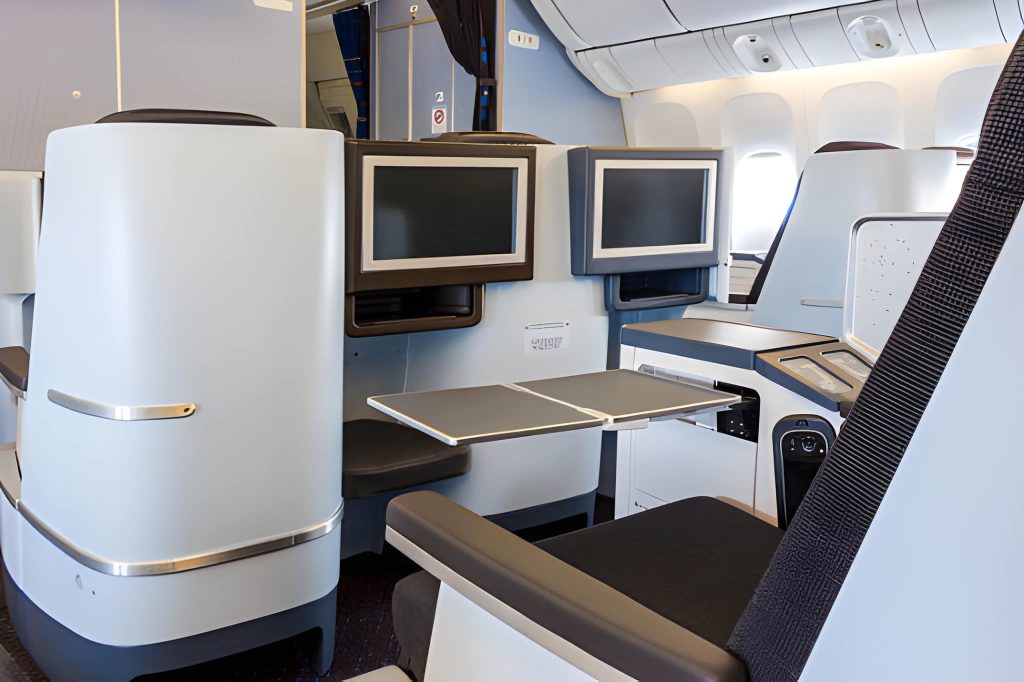
Across many other long-haul aircraft, business class is still strong, even if it is not the flagship suite.
Instead of a door, you usually get privacy through the seat shell, dividers, and smart angles. You can still expect a seat that goes fully flat, a sturdy table for dining and laptop work, enough storage to keep your phone, headphones, and small items organized, and multiple charging options like outlets and USB ports.
The Deep-Recline Seat on Certain Routes
On some aircraft used for medium-haul routes, you may find a business-class seat that reclines into multiple positions but does not become fully flat.
These seats can still feel comfortable, especially for daytime flights or shorter overnights, but you should adjust expectations if sleep is your top priority. You will typically still have personal space, a seat-control system that lets you shift between lounging and resting positions, a personal entertainment screen, and convenient charging access.
Short Flights: Wider Recliners Instead of Beds
On short-haul routes, business class typically means a wider reclining seat rather than a bed. These flights are usually brief, so the main value comes from extra space, a calmer cabin, and the airport benefits that come with a premium ticket.
Dining, Drinks, and Comfort Extras
Even when the seat varies, business-class service tends to stay consistent. This airline is known for a premium feel that shows up in the details.
Meals With a Clear Japanese Influence
Business-class meals are often offered a la carte style, usually with both Japanese and Western options. Menus are commonly built around seasonal ingredients and a destination-inspired approach.
Many airlines publish route-based menu previews online by travel month, origin, and destination. It is a helpful planning tool if you have dietary needs or you simply want to know what style of meal service to expect.
Beverages Included
You can generally expect complimentary beverages with a strong selection, including wine, Japanese sake, beer, and spirits, plus non-alcoholic options like tea, coffee, juice, and soft drinks.
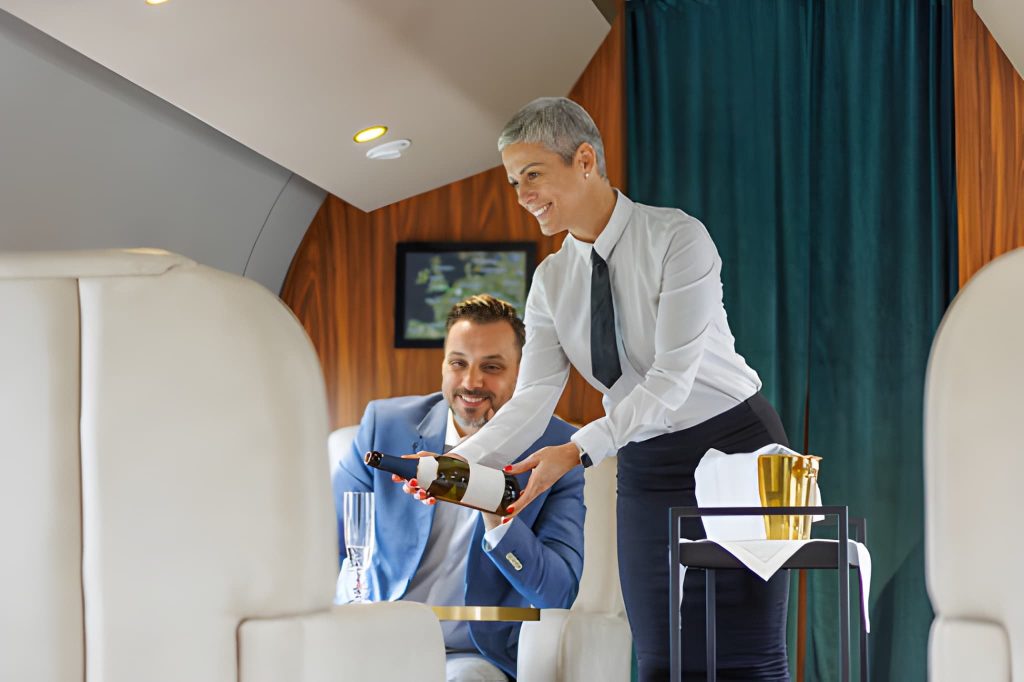
If you want to get more value from the experience, a simple move is to ask what pairs best with your meal selection. Premium-cabin crews often know the beverage list and can make a good suggestion.
Amenity Kits and Optional Loungewear
On many long-haul international routes, business class includes an amenity kit with practical items such as:
- Toothbrush set
- Earplugs
- Eye mask
- Tissues
- Small accessories that make sleeping easier
On select long-haul flights, the airline may offer loungewear or a sleep set created with a partner brand.
Before You Board: Lounges and Priority Handling
A business-class redemption often includes airport perks that can feel just as valuable as the seat itself.
Lounge Access
If the departure airport has a lounge run by this airline, business-class travelers can typically enter before the flight. If there is no carrier lounge, you may still be able to use a partner lounge through the airline’s global alliance network.
What you get depends on the airport, but lounges often give you a quieter place to sit, better food and drink than the terminal, more reliable Wi-Fi, and sometimes showers. You also may find staff support that helps if you have a connection question or a schedule change.
Priority Check-In and Bags
Business-class bookings often come with a dedicated check-in area and priority baggage handling. It is not flawless everywhere, but it can reduce waiting and help your bags appear earlier at the carousel.
How Award Pricing Works for This Airline
Because this airline participates in a global alliance, you can book its business-class award flights using multiple frequent-flyer programs.
Here is the important part: the same seat can cost very different amounts of miles depending on which program you use.
On top of that, not every program is equally easy to earn. Some accept transfers from major U.S. card points systems, which makes it much easier to build a balance. Other programs require you to earn miles through flying or limited earning options.
Below are three broad booking routes that cover most travelers’ options.
Booking Route 1: Use a Large U.S.-Based Airline Loyalty Program
If you already have miles in a major U.S.-based airline program that partners with this Japan-based carrier, you may be able to book business-class awards directly through that program.
You can usually search and ticket online. The challenge is availability, especially on routes between Japan and North America. Partner award space can be limited, and premium cabins disappear quickly.
Even so, when seats show up, pricing can be strong. For a mid-February 2026 round-trip between Tokyo (NRT) and Frankfurt (FRA), we saw pricing at 150,000 miles plus about $168 in taxes and fees. The same itinerary booked with cash on the operating airline’s site cost 601,620 Japanese Yen (about $4,066).
After accounting for the taxes and fees you still pay, that redemption lands around 2.6 cents per mile, which is excellent for a premium cabin.
Booking Route 2: Use an Asia-Based Alliance Partner Program
Another common method is booking through an Asia-based airline loyalty program that can ticket alliance partner awards. These programs often show a reasonable amount of partner availability and can be easy to use online.
The trade-off is that pricing may be higher in miles and the cash portion can be larger. Still, this route can be practical, especially if you can transfer points into the program from a major U.S. card points system.
For the same Tokyo (NRT) to Frankfurt (FRA) round trip, we saw pricing at 178,000 miles plus 4,859 Hong Kong Dollars (about $626).
Cash price on the operating airline’s site stayed the same at 601,620 Japanese Yen (about $4,066). After subtracting the fees you still pay, the value comes in close to 2 cents per mile, which is still strong.
This approach can be especially useful if you can transfer points into the program at a 1:1 ratio from one of the major U.S. card points systems. Transfer access can matter more than perfect cents-per-mile math when you are trying to actually book a seat. Some markets also offer a consumer card tied to this type of program, which can earn miles on everyday spending.
Booking Route 3: Use the Operating Airline’s Own Program
In many cases, the operating airline’s own program offers the best mileage pricing for its business-class awards.
The challenge is earning the miles. Depending on where you live, it may be harder to build a balance unless you credit flights to the program or have access to a transferable points system that can move points into it.
When you do have the miles, the pricing can be compelling. For the same Tokyo (NRT) to Frankfurt (FRA) round trip, we saw pricing at 110,000 miles plus 91,620 Japanese Yen (about $619) in taxes and fees. With the cash fare still at 601,620 Japanese Yen (about $4,066), that redemption works out to about 3.1 cents per mile, which beats the other two examples.
This program may also show wider access to its own award inventory and use more predictable pricing in some cases.
A Better Way to Search So You Actually Find Seats
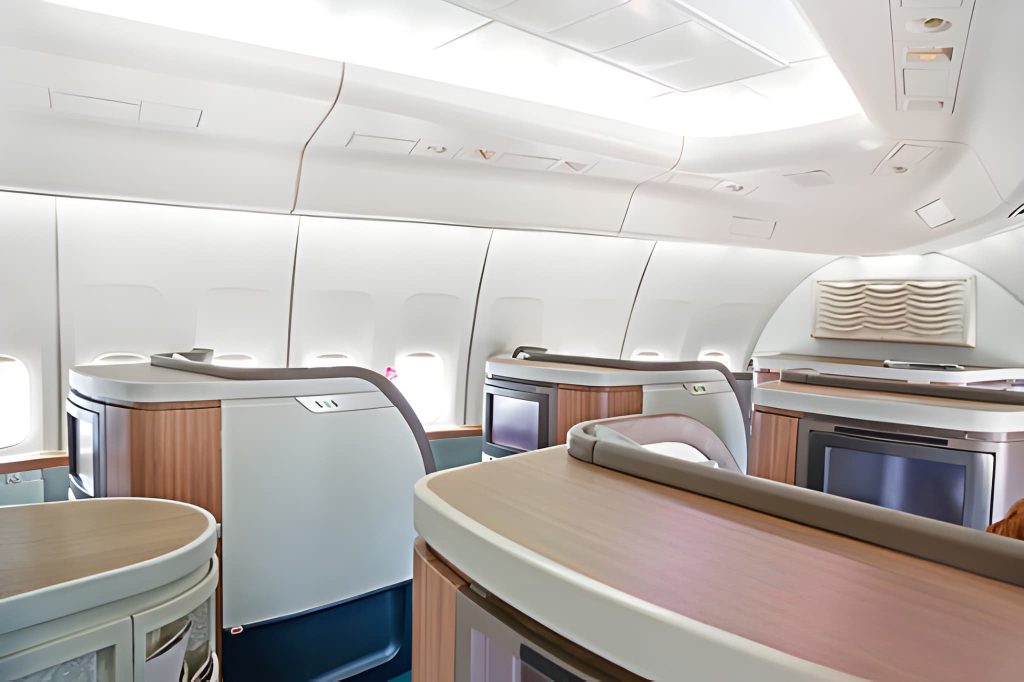
If you want to increase your odds of finding business-class award space, treat it like a system instead of a one-time search.
- Check a range of dates, not a single day. Award seats appear in patterns, not on demand.
- Search more than one city pair. A nearby airport can unlock space that does not exist on your preferred route.
- Compare at least two programs before you commit. Pricing and fees vary more than most travelers expect.
- Always look at the cash portion. Lower mileage costs can come with higher taxes and fees.
- Verify the aircraft before you finalize. If you want the suite-style seat, you need the newest long-haul aircraft.
- Transfer points only after you see the seat. If transfers take time, plan for that delay.
These steps do not guarantee availability, but they reduce the most common errors, like transferring too early or chasing a route that rarely releases partner award seats.
Join Our Community and Keep Your Redemptions Simple
If you are serious about booking a premium cabin with points, you do not have to figure it out alone. Inside our free TheMilesAcademy community, we share practical award-search habits, booking lessons, and reminders that help you avoid common mistakes like transferring points too early or chasing the wrong aircraft.
When you are ready to build your plan, use our free Card Finder Tool to match your everyday spending to a points-earning setup that fits your goals. That way, the next time you spot business-class award space, you will have a clearer path to the points you need.

