
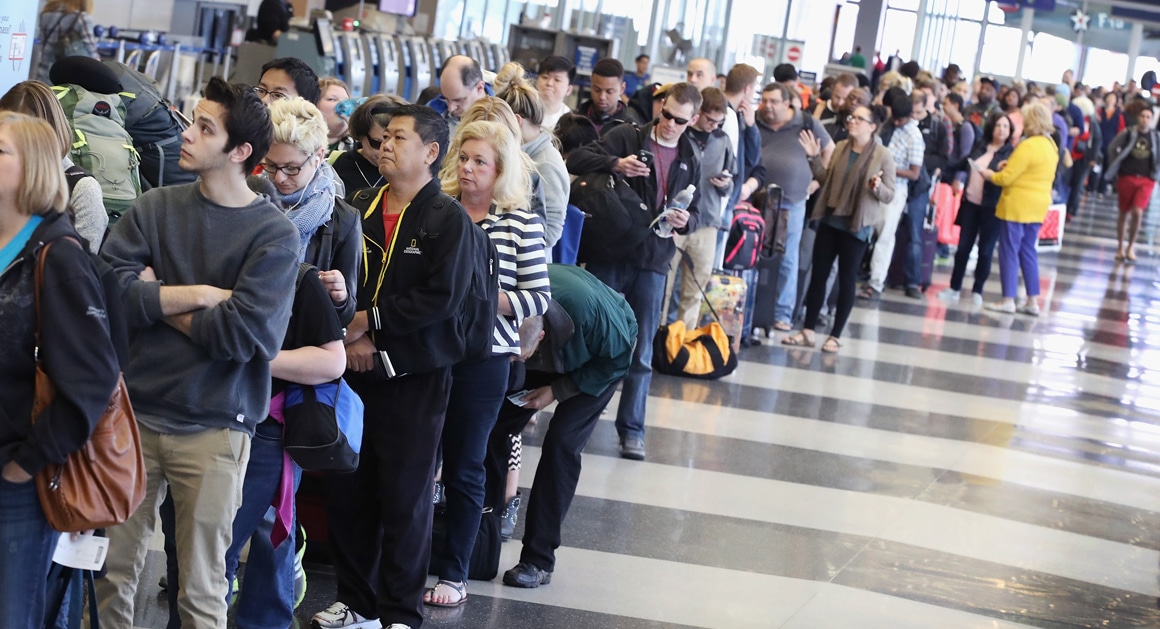
Airport lines can turn a normal travel day into a long, boring contest to see who can stand still the longest. If you fly through U.S. airports, there are two well-known government programs that can shrink that waiting time. They do it in different places, so the best choice depends on what kind of trips you take.
Here is the big idea: TSA PreCheck helps before you fly by making the security checkpoint easier. Global Entry helps after you land from an international trip by speeding up the entry process back into the United States, and it typically includes TSA PreCheck too.
Some travelers also use a separate private biometric lane service at certain airports to speed up the “show your ID” part, but that is a different type of service and not required to understand the two programs we are comparing here.
We are going to walk through what each program does, how enrollment works, what the rules look like for families, what the fees are, and how to decide what is most beneficial for you.
The One-Sentence Answer
If you mostly travel inside the U.S., TSA PreCheck can be the simplest upgrade.
If you take international trips and hate long arrival lines when you get back, Global Entry is usually the better fit because it speeds up reentry and includes TSA PreCheck.
That is the quick version. Now let’s unpack it without turning this into a boring textbook.
Where TSA PreCheck Helps
TSA PreCheck is an expedited security program run by the U.S. Transportation Security Administration. It is for travelers who are preapproved as low risk.
When your boarding pass shows the TSA PreCheck indicator, you can usually use a dedicated TSA PreCheck screening lane. The goal is to make checkpoint screening quicker by removing some of the usual “take everything off, take everything out” steps.
Here is what TSA PreCheck typically changes at security:
- You usually keep your belt and light jacket on.
- You usually leave your laptop and liquids in your bag.
- Many TSA PreCheck travelers are screened with a traditional walk-through metal detector.
A catch is that a TSA PreCheck lane is not always available or open. Some airports do not run a dedicated TSA PreCheck line at every checkpoint or at every time of day. If there is no separate lane, you may be directed into the standard TSA lane. Even then, you generally keep the TSA PreCheck conveniences about what you do not need to remove.
At the time of writing, TSA PreCheck is available at 200-plus U.S. airports, and more than 90 domestic and international airlines participate. You only receive TSA PreCheck access if your airline participates, so your airline matters just as much as your enrollment.
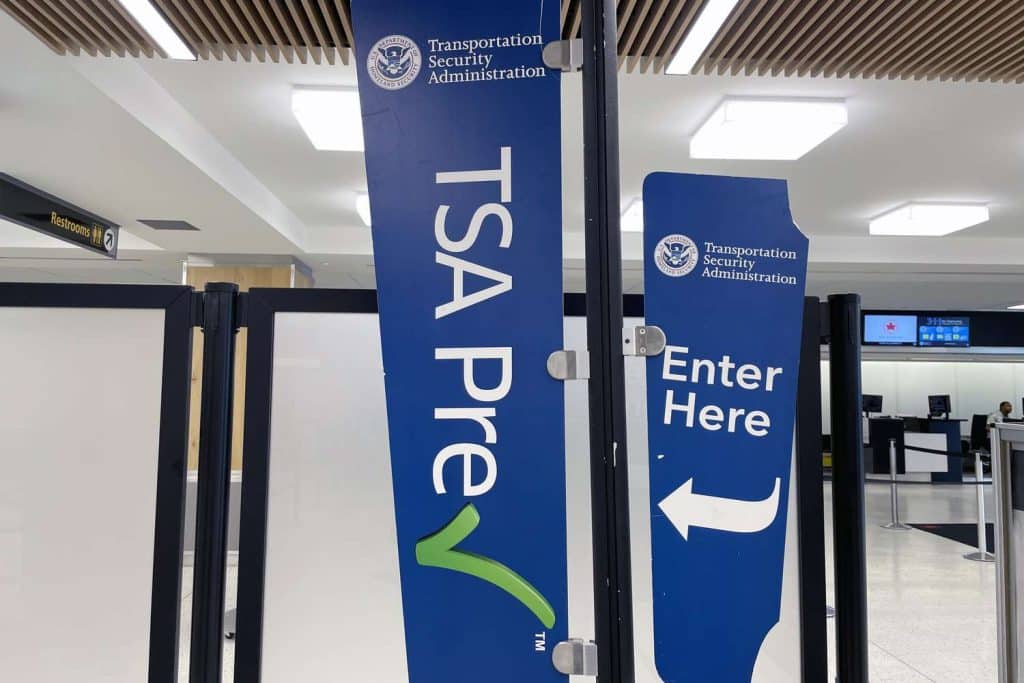
If you often fly through big, busy airports where lines get long fast, like Los Angeles International Airport (LAX), John F. Kennedy International Airport (JFK), Hartsfield-Jackson Atlanta International Airport (ATL), Chicago O’Hare International Airport (ORD), or Dallas Fort Worth International Airport (DFW), TSA PreCheck can feel like a big quality-of-life improvement. The exact benefit still depends on the terminal and how the checkpoint is staffed that day.
How TSA PreCheck Enrollment Works
TSA PreCheck enrollment starts online.
You create a Trusted Traveler account and complete the application. If your application is approved, you schedule an in-person appointment at one of about 400 enrollment centers.
The in-person appointment is usually short, around 10 minutes. It includes fingerprinting and a background check.
After the appointment, many travelers are approved within a few days, although some applications can take up to 30 days to process. Once you are approved, you receive a Known Traveler Number (KTN).
Your KTN is the key that makes TSA PreCheck show up when you fly. You need to enter it during the booking process each time you make an airline reservation. If you forget, you can often add it later, as long as you do it before you check in for your flight. It also helps to save your KTN in your frequent flyer profiles so it can be added automatically when you book.
One more important point: TSA PreCheck does not mean you get guaranteed expedited screening every single time. The TSA uses unpredictable security measures across airports, and all travelers are screened. Even as a member, you can still end up in standard screening or get extra steps on certain trips.
Eligibility in the source details includes U.S. citizens, U.S. nationals, and lawful permanent residents over age 12. Travelers age 12 and under may use the TSA PreCheck lane when traveling with a parent or guardian whose boarding pass shows the TSA PreCheck indicator.
Where Global Entry Helps
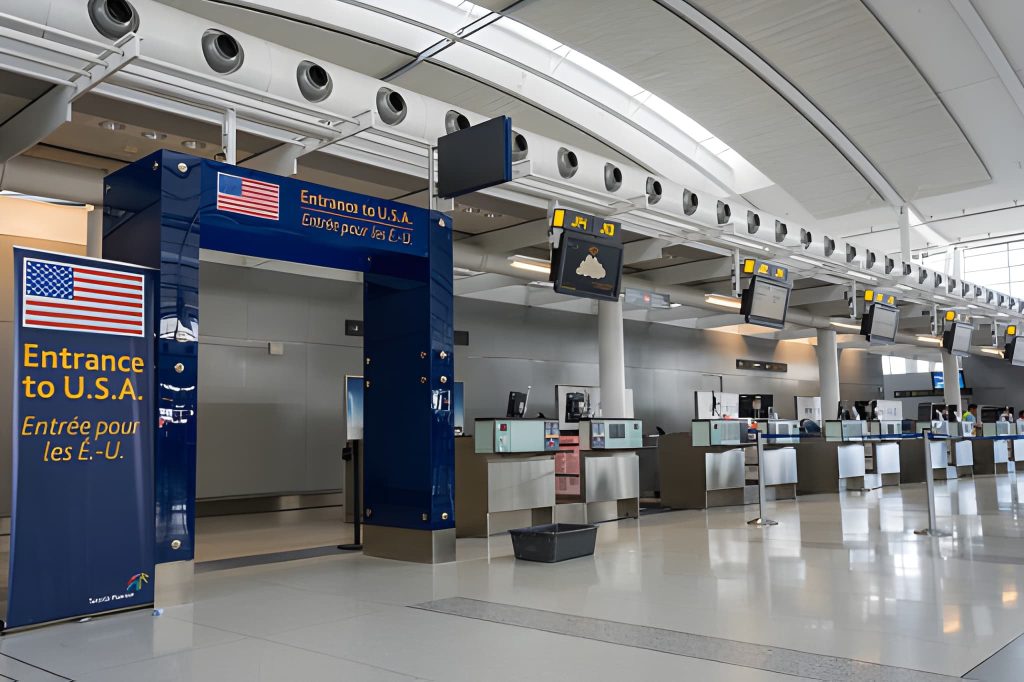
Global Entry is run by U.S. Customs and Border Protection. It is designed to speed up arrival processing when you return to the United States after international travel.
Instead of waiting in the regular entry line and doing extra paperwork, Global Entry members can use automated kiosks at more than 75 airports across the U.S. and select preclearance locations abroad.
Here is the detail that makes Global Entry especially attractive: a Global Entry membership includes TSA PreCheck. That means if you qualify and you travel internationally, Global Entry can cover both the departure-side security benefits and the return-side arrival benefits.
When you enter the U.S. at a participating airport, Global Entry is meant to reduce waiting and keep you moving. Many members do not need to fill out forms or stand in the main processing lines. Instead, they use a kiosk and follow the prompts.
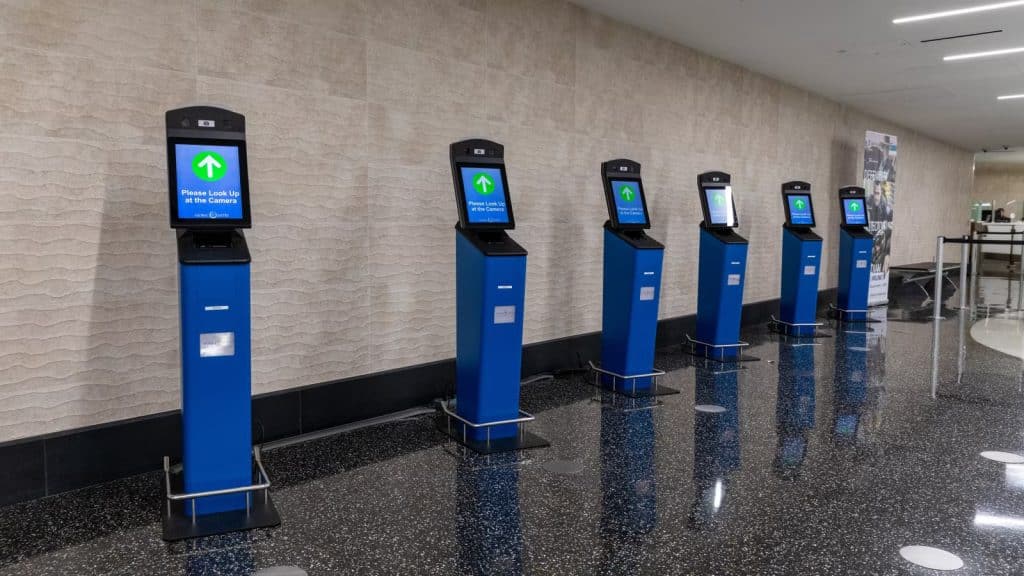
What happens at a kiosk can vary by airport, but the source details describe a process that can include:
- Presenting a machine-readable passport or a U.S. permanent resident card
- Fingerprint verification on a scanner
- Completing a customs declaration
- Receiving a printout to share with customs
At some airports, facial recognition makes things even easier. In those locations, you may not need to show a printed receipt to an officer before exiting the baggage claim area. Biometric technology is spreading across airports, so the experience may keep improving over time.
Just like TSA PreCheck, Global Entry is not a magic pass that skips every check. Some members can still be selected for further examination when entering customs. Membership usually lowers your waiting time, but it does not remove all screening.
How Global Entry Enrollment Works
You apply for Global Entry online through the Trusted Traveler Programs website. Like TSA PreCheck, Global Entry membership is valid for five years.
If Customs and Border Protection conditionally approves your application, you will need to complete an interview.
The standard path is to schedule an interview at a Global Entry enrollment center. The source notes that scheduling can be difficult at times due to an ongoing backlog.
If you cannot get an appointment, another option may help: Enrollment on Arrival. This process allows you to complete your interview when you arrive in the U.S. after an international trip, during the customs process.
During the interview process, you can expect a background check, interview questions, and fingerprinting. The source mentions one staff interview taking about five minutes, but timing can vary depending on airport staffing and how busy the arrival area is.
Who Can Apply and What Can Block Approval
For TSA PreCheck, the source details list eligibility for U.S. citizens, U.S. nationals, and lawful permanent residents.
For Global Entry, the source details say eligibility can include U.S. citizens, U.S. lawful permanent residents, members of a South Korean entry service, and citizens of Germany, Panama, and Mexico. The source also notes that Canadian citizens and residents can be eligible for Global Entry benefits through membership in a separate trusted traveler program.
Eligibility rules and participating countries can change, so check current terms before applying.
The source also lists reasons someone may not be eligible for Global Entry, including conviction of any criminal offense, pending criminal charges, outstanding warrants, or not being able to satisfy Customs and Border Protection of low-risk status.
What Families Should Know Before Signing Up
These programs treat children differently, and this is where people get tripped up.
For TSA PreCheck, travelers age 12 and under may use the TSA PreCheck lane when traveling with a parent or guardian who has the TSA PreCheck indicator on their boarding pass.
For Global Entry, children generally cannot use it just because an adult has it. According to the source details, each traveler needs their own Global Entry membership to use Global Entry, even when traveling together. Travelers of all ages can be eligible to enroll in Global Entry.
Fees, Renewal Costs, and What You Get
The source details include specific fees, which we will repeat as written. These can change, so confirm current pricing before applying or renewing.
Global Entry has a nonrefundable $120 membership fee. If you are approved, you get both Global Entry and TSA PreCheck benefits for five years.
TSA PreCheck pricing depends on the approved enrollment provider. The source lists two providers and these costs:
One provider charges $76.75.
The other provider charges $85.
The source also lists online renewal examples: $70 for one online renewal route and $58.75 for another.
Because these numbers and renewal rules can change, treat them as a snapshot and check current terms before applying.
How Application Fee Reimbursement Typically Works
The source explains that many travel-focused payment accounts offer statement credit reimbursement for these application fees, sometimes up to $120.
These reimbursements are often available every four to five years. The exact timing and rules depend on the issuer, so check current terms before applying this.
The source also notes two practical points:
First, many issuers allow you to use the reimbursement to pay for someone else’s application fee, as long as you charge the fee to the eligible account.
Second, some eligible accounts offer the reimbursement for each authorized user account you add. In those cases, reimbursement typically requires charging one application fee to each authorized user account.
Which Program Is More Beneficial for You?
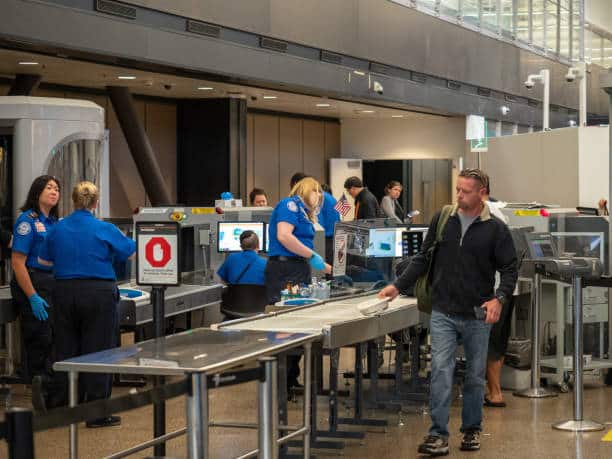
We decide this based on how you actually travel, not how you wish you traveled.
If you take international trips regularly, Global Entry is often the best value because it speeds up arrival processing and includes TSA PreCheck.
If you rarely leave the country, TSA PreCheck alone can still be a strong choice because it focuses on the security checkpoint, which is the part most domestic travelers deal with most often.
If you want a quick way to pick, here are the questions we ask:
- Do you return to the U.S. from international trips enough that arrival lines drive you crazy?
- Are most of your flights inside the U.S., where security is the main pain point?
- Can you reasonably get an appointment, or would Enrollment on Arrival be easier for you if you go with Global Entry?
Your answers usually point to the right program.
Join Our Free TheMilesAcademy Community Before Your Next Airport Day
If you want airport days to feel calmer, it helps to have a simple routine and a group you can lean on. In our free TheMilesAcademy community, we share practical travel tips, easy checklists, and examples so you can spend less time guessing and more time moving.
We also built a Card Finder Tool to help you sort through travel-friendly payment options based on what you actually do, like domestic trips, international trips, or just wanting fewer fees and better everyday rewards. If you are considering a statement credit reimbursement for trusted traveler program fees, the Card Finder Tool can help you narrow down what to look for without getting lost.
Join the free TheMilesAcademy community, use the free Card Finder Tool, and make your next trip through places like LAX, JFK, ATL, ORD, or DFW feel a little more under control.